November marks a quieter time in the foraging calendar, yet Britain’s woodlands, hedgerows and coastlines still offer a surprising bounty for those willing to venture out. As the last leaves fall and the first frosts arrive, nature provides a final harvest before winter’s grip takes hold. From nutrient-dense fungi to coastal treasures and late-fruiting hedgerow offerings, this month rewards the observant forager with ingredients that have sustained communities for centuries.
But what you can forage in November and where can you find these wild edibles, what is their historical uses, nutritional benefits and how do you prepare them safely in your kitchen.
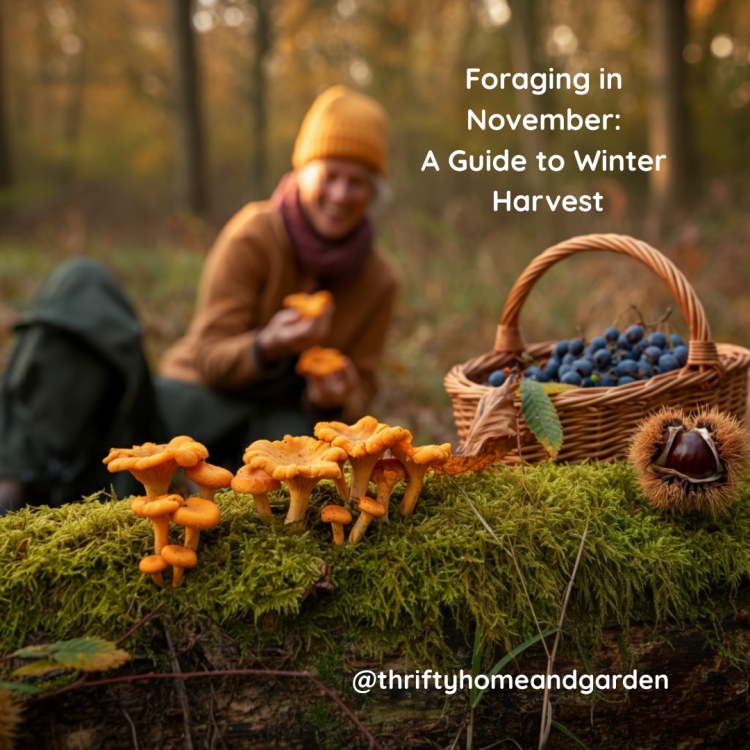
Velvet Shank Mushrooms (Flammulina velutipes)
Where to Find Them
Velvet shank mushrooms appear on dead or dying deciduous trees, particularly elm, willow and elder. Look for clusters of small, orange-brown caps with distinctive dark, velvety stems. They’re one of the few mushrooms that continue fruiting through November and even into winter, thriving in the cold when most fungi have disappeared.
Benefits and Uses
Rich in B vitamins and antioxidants, velvet shanks have been used in traditional Asian medicine for centuries. Their slightly gelatinous texture when cooked makes them perfect for soups and stir-fries. The caps are the choicest part—simply remove the tough stems before cooking.
Recipe Ideas
Sauté velvet shanks with garlic and butter, then toss through pasta with cream and parsley. Alternatively, add them to miso soup or a hearty vegetable broth. Their subtle, slightly fruity flavour complements Asian-style dishes beautifully.
Important Note
Always positively identify any mushroom before consumption. Velvet shanks are distinctive, but if you’re uncertain, consult an expert or use a reliable field guide. The velvety stem that remains pliable even when pinched is a key identifying feature.
Rosehips (Rosa canina)
Where to Find Them
Dog rose hips persist on hedgerows throughout November, their bright red or orange fruits standing out against bare branches. These oval berries become sweeter after the first frost, which softens their flesh and concentrates their natural sugars. Seek them out along country lanes, woodland edges and in neglected gardens.
Benefits and Uses
Rosehips contain more vitamin C than oranges—up to 20 times more by weight. During the Second World War, the British government organised volunteers to collect rosehips when citrus imports were restricted, producing rosehip syrup to prevent vitamin C deficiency in children. They also provide vitamins A, E and essential fatty acids.
Recipe Ideas
Create traditional rosehip syrup by simmering the fruits (with seeds and hairs removed) in water, then straining and adding sugar. This versatile syrup can be drizzled over porridge, mixed into yoghurt or used as a base for cordials. Dried rosehips make a pleasant tea with a tart, slightly sweet flavour. For a more adventurous project, try rosehip jam or jelly.
Preparation Tip
The fine hairs inside rosehips can irritate the mouth and digestive system, earning them the childhood nickname “itching powder.” Always strain rosehip preparations through muslin or a fine sieve to remove these irritants.
Hawthorn Berries (Crataegus monogyna)
Where to Find Them
Hawthorn trees and hedges display their deep red berries throughout November. These haws grow abundantly across Britain, particularly in traditional hedgerows and at woodland margins. The small, round berries cluster densely along thorny branches.
Benefits and Uses
Hawthorn has been valued for cardiovascular health for centuries. Herbalists traditionally used it to support heart function and circulation. The berries contain antioxidants, including proanthocyanidins and flavonoids. Beyond their medicinal properties, haws have fed rural communities during lean times, though their slightly mealy texture and large seeds mean they’re better suited to preserves than eating fresh.
Recipe Ideas
Hawthorn berry ketchup offers an earthy, slightly tangy condiment that pairs wonderfully with game meats and mature cheeses. Simply simmer the berries with vinegar, onions, and spices, then strain to remove seeds. Hawthorn jelly, made by boiling the berries and straining the juice before adding sugar, produces a beautiful ruby-coloured preserve with a subtle, apple-like flavour.
Caution
Avoid overconsumption of hawthorn berries, particularly if you take heart medication, as they can interact with certain drugs. Moderation is key.
Sea Beet (Beta vulgaris subsp. maritima)
Where to Find Them
The wild ancestor of beetroot, chard, and spinach, sea beet grows along Britain’s coastlines, thriving in the salty air where few other vegetables dare. Look for glossy, dark green leaves on shingle beaches, sea walls, and coastal paths. November’s plants are still tender and flavourful before winter truly sets in.
Benefits and Uses
Sea beet leaves provide iron, vitamins A and C, and minerals absorbed from the mineral-rich coastal soil. Unlike cultivated spinach, which can turn bitter as it matures, sea beet maintains a pleasant flavour throughout its growing season. Coastal foragers have gathered these nutritious greens for thousands of years.
Recipe Ideas
Use sea beet as you would spinach—wilted with butter and nutmeg, stirred through risotto, or layered in vegetarian lasagne. Its slightly earthy, mineral flavour stands up well to robust seasonings. Young leaves can be eaten raw in salads, though older leaves benefit from cooking.
Sustainable Foraging
Take only the outer leaves, leaving the growing centre intact so the plant can regenerate. This ensures a continued harvest and allows the plant to survive for next year.
Oyster Mushrooms (Pleurotus ostreatus)
Where to Find Them
These shelf-like fungi grow in bracket-shaped clusters on dead or dying deciduous trees, particularly beech and ash. Their grey-brown caps and white gills are distinctive, as is their subtle aniseed aroma. Oyster mushrooms fruit prolifically in November, often appearing after wet weather followed by cooler temperatures.
Benefits and Uses
Oyster mushrooms contain protein, B vitamins, and ergothioneine, a powerful antioxidant. They’ve been cultivated in Asia for over a thousand years and are now farmed commercially worldwide. Wild specimens often have a more robust flavour than their cultivated cousins.
Recipe Ideas
Their meaty texture makes oyster mushrooms excellent for vegetarian dishes. Tear them into strips and fry in olive oil until golden and crispy at the edges, then season with salt and pepper for a simple but satisfying side dish. They also work beautifully in cream sauces, risottos or Asian stir-fries with ginger and soy sauce.
Identification
Oyster mushrooms have no ring on the stem and no volva at the base. Their gills run down the short stem, and they grow in overlapping clusters. While they’re relatively easy to identify, always cross-reference multiple field guides before consuming any wild mushroom.
Foraging Ethics and Safety
Before you set out with your basket, remember these essential principles:
- Know the law: Some areas prohibit foraging, and you must have landowner permission on private property. Never forage in nature reserves or protected sites.
- Positive identification: Only collect what you can identify with absolute certainty. Mistakes can be dangerous, particularly with mushrooms.
- Sustainable harvesting: Take only what you need and leave plenty for wildlife and regeneration. A good rule is to take no more than one-third of what you find.
- Respect the environment: Avoid damaging plants or disturbing wildlife habitats. Tread carefully and leave no trace.
Bringing November’s Harvest to Your Table
November foraging connects us to rhythms that governed our ancestors’ lives for millennia. These wild foods sustained communities through harsh winters and provided essential nutrition when cultivated crops were scarce. While we no longer depend on foraged foods for survival, gathering them offers something equally valuable: a deeper relationship with the natural world and an understanding of the landscape’s generosity.
Whether you’re making rosehip syrup as wartime volunteers once did, or discovering the subtle flavours of coastal greens, November’s offerings remind us that nature’s pantry never truly closes. Bundle up, venture out, and discover what Britain’s wilder corners have to offer this month.
Further Reading: Eat Weeds!, Autumn Foraging: Nature’s Harvest, Foraging in January: A Winter’s Treasure Hunt, The Joy of Winter Walks, Winter Mindfulness: Finding Joy in the Chill, Why You Should Consider Growing Your Own Food.