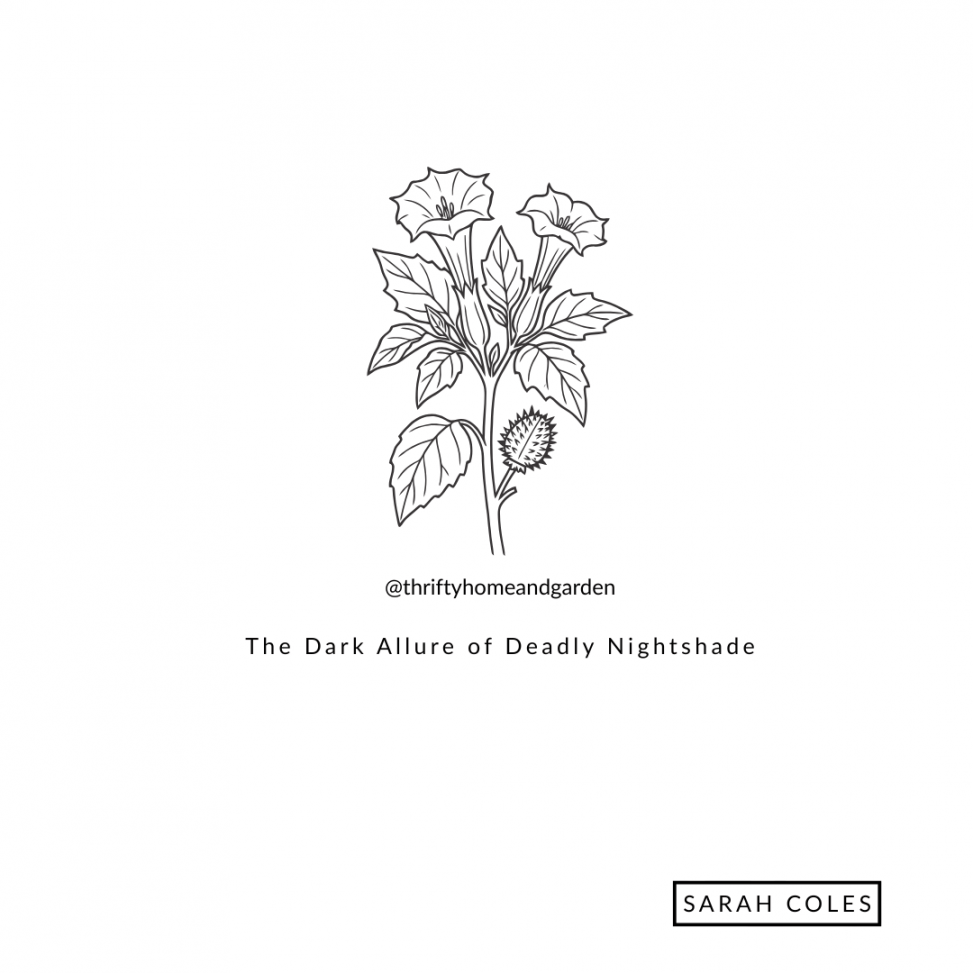
Nature is full of surprises, and often the most beautiful plants hold the most potent secrets. One such plant, draped in a cloak of both danger and historical intrigue, is the deadly nightshade. While its name might send a shiver down your spine, this fascinating species has a rich story to tell. By understanding it better, we can appreciate the complex role it plays in our ecosystem and history.
What is Deadly Nightshade?
Known to botanists as Atropa belladonna, deadly nightshade is a member of the Solanaceae family. This is a surprisingly large and familiar family of plants that includes everyday staples like potatoes, tomatoes, and aubergines. It is strange to think that the chips on your dinner plate are distant cousins of one of England’s most poisonous plants, but nature often groups the harmless with the hazardous.
The name Atropa belladonna itself is steeped in mythology and beauty. Atropa refers to Atropos, one of the three Greek Fates who was responsible for cutting the thread of life—a nod to the plant’s lethal potential. Belladonna, meaning “beautiful lady” in Italian, references a historical cosmetic practice where drops derived from the plant were used to dilate women’s pupils, making them appear more alluring, though at great risk to their sight.
Spotting the Signs: A Description
Identifying deadly nightshade in the wild is a thrilling find for any nature enthusiast, though it must always be done with caution and respect. It is a perennial herbaceous plant, which means it dies back in the winter and re-emerges with vigour each spring.
The plant can grow quite tall, often reaching up to 1.5 metres. Its stems are branching and green, sometimes flushed with a purple hue. The leaves are ovate (egg-shaped) and can be quite large, growing up to 18 centimetres long.
However, it is the flowers and fruit that are most distinctive.
- The Flowers: Blooming from June to August, the flowers are bell-shaped and a dull, purplish-brown colour with green tinges. They droop singly from the leaf axils, possessing a sombre, understated beauty.
- The Berries: Following the flowers come the infamous berries. Initially green, they ripen into a deep, glossy black. They are approximately the size of a cherry and are held by a five-pointed star of green sepals. To the uninitiated, they look incredibly tempting—sweet and juicy—but they are highly toxic.
Where and How it Grows
If you are hoping to spot deadly nightshade on your next woodland walk, you will need to know where to look. It is native to Europe, North Africa, and Western Asia, and it has naturalised in parts of North America.
In the UK, it is most commonly found in the southern and eastern parts of England. It thrives in calcareous (chalky) soils. You will often find it lurking in disturbed ground, open woodlands, hedgerows, and scrubland. It favours shady areas, often growing near old ruins or quarries, which only adds to its gothic reputation.
The plant enjoys a habitat where the soil has been unsettled. This preference for disturbed ground means it can sometimes appear unexpectedly, a sudden and dark visitor to a patch of land that has recently been cleared or changed.
The Dual Nature: Benefits and Disadvantages
It is easy to label Atropa belladonna simply as “bad” due to its toxicity, but like all things in nature, it is not quite that black and white.
The Dangers
There is no escaping the fact that this plant is incredibly poisonous. Every part of the plant contains tropane alkaloids, including atropine, scopolamine, and hyoscyamine. These toxins attack the nervous system.
Ingesting even a small number of berries can be fatal to a child, and a slightly larger amount can kill an adult. The roots are the most toxic part, though the berries pose the greatest risk due to their attractive, fruit-like appearance. Symptoms of poisoning include dilated pupils, sensitivity to light, blurred vision, tachycardia, loss of balance, staggering, headache, rash, flushing, dry mouth and throat, slurred speech, urinary retention, constipation, confusion, hallucinations, delirium, and convulsions.
Because of this, it is vital to educate children about the dangers of eating unknown berries and to treat this plant with the utmost distance and respect.
The Benefits
Despite its lethal nature, deadly nightshade has been a powerful ally in medicine for centuries. The very toxins that make it dangerous are used in controlled, minute doses to heal.
- Ophthalmology: Atropine, derived from the plant, is still used by eye doctors today to dilate pupils during examinations.
- Surgery: It is used as a pre-operative medication to reduce salivation and bronchial secretions.
- Antidote: Ironically, atropine can be used as an antidote for poisoning by organophosphate insecticides and nerve agents.
- Pain Relief: Historically, plasters made from the plant were used to relieve pain, though this is less common in modern herbalism due to safety concerns.
It serves as a potent reminder that the difference between a poison and a cure often lies in the dosage.
Folklore, Myths, and Poetry
A plant with such a dramatic reputation naturally cultivates a garden of stories around it.
In folklore, deadly nightshade was believed to be the devil’s favourite plant. Legends suggest that the devil himself would tend to the plants, only leaving them on Walpurgis Night (the eve of May Day) when he was preparing for the witches’ sabbath. Because of this association, parents would tell their children that if they ate the berries, they would meet the devil.
It was also a central ingredient in “flying ointments” used by witches. These salves were a mix of toxic plants and fats, which, when absorbed through the skin, would cause hallucinations and a sensation of flying.
Poets and writers have long been captivated by its dark romance. It appears in botanical poetry and gothic literature as a symbol of deception—beautiful on the outside, but hiding death within.
“I have a little garden,
A garden of my own,
And every day I water there
The seeds that I have sown.
I love my little garden,
And tend it with such care,
You will not find a faded leaf
Or blighted blossom there.”
While not explicitly about nightshade, verses regarding secret gardens often evoke the feeling of hidden, dangerous plants tended with care. The plant serves as a metaphor for things in life that are tempting but ultimately destructive.
Respecting Nature’s Darker Side
Deadly nightshade is a testament to the power and complexity of the natural world. It is a plant of contradictions: beautiful yet deadly, a poison and a cure, a symbol of danger and a source of medical wonder.
Encountering Atropa belladonna in the wild is a privilege. It connects us to history, to folklore, and to the intricate chemistry of the botanical world. It reminds us that nature is not just there to be consumed or used, but to be respected and understood.
So, the next time you are exploring the chalky woodlands or wandering near old ruins, keep an eye out for the dull purple bells and the glossy black berries. Admire them, photograph them, and learn from them—but remember to look with your eyes, not your hands.
Further Reading: Discover Nature’s Bounty Foraging for Food and Fun, Foraging in January: A Winter’s Treasure Hunt, The Art of Foraging: Unlocking Nature’s Bounty Sustainably, Eat Weeds!
Inspiration: Instagram, TikTok, Threads, Pinterest, Twitter, BlueSky