There are breakfasts that arrive with a certain amount of ceremony. Eggs Benedict demands its hollandaise. A full English requires several pans, reasonable timing and, ideally, somebody else to do the washing-up.
Porridge asks for a saucepan and a spoon.
Perhaps that is why we underestimate it.
A bowl of oats may not look particularly adventurous on a grey Tuesday morning, but nutritionally it has rather a lot going for it. It is inexpensive, warming, wonderfully adaptable and, with a few well-chosen additions, capable of becoming part of a very balanced breakfast indeed.
There is also the rather important matter of taste.
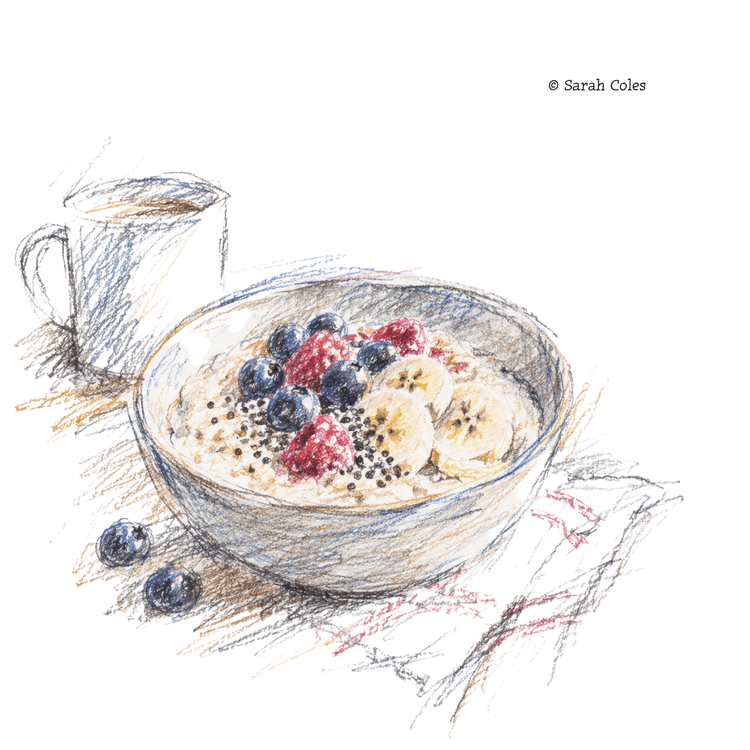
Because porridge needn’t be a bowl of worthy beige. There are blueberries to burst into it, apples to soften through it, walnuts to scatter over the top, cinnamon to stir in and cocoa to whisk into warm milk.
And, as anyone who has made porridge for long enough eventually discovers, there is the surprisingly controversial business of whether it ought to contain milk, water, salt — or all three.
So, spoon at the ready.
Is porridge good for you?
For most people, plain porridge oats are an excellent food to include as part of a balanced diet.
Oats are wholegrains and provide carbohydrate, protein and fibre. Of particular interest is a type of soluble fibre called beta-glucan.
Beta-glucan forms a gel-like substance in the gut. Eating around 3g of beta-glucan from oats or barley each day, as part of a healthy diet, can help maintain healthy cholesterol levels.
A typical 40g serving of porridge oats provides around 1.4g of beta-glucan, so your morning bowl makes a useful contribution towards that daily amount rather than necessarily supplying all of it.
Oats are also a useful source of fibre, something many of us could do with eating more of.
And then comes porridge’s other great virtue: it is a very accommodating breakfast.
Add berries and you have fruit and more fibre. Add Greek yoghurt and you increase the protein and calcium. Add nuts or seeds and you introduce texture, minerals and unsaturated fats.
Porridge is, in that sense, less a finished dish than a very useful starting point.
Are there any downsides to porridge?
Very few belong to the oats themselves.
Most of the nutritional mischief happens afterwards.
Plain instant oats, for example, are still oats and can be perfectly nutritious. The distinction is worth making because instant does not automatically mean unhealthy.
The thing to watch is flavoured or sweetened instant porridge, which can contain considerably more added sugar. Choosing plain oats and adding your own fruit and toppings gives you much more control over what goes into the bowl.
Honey, maple syrup and golden syrup may sound rather more wholesome than spoonfuls of white sugar, but they still contribute free sugars. A little for flavour is one thing; turning the bowl into a small inland sea is another.
Nuts, seeds and nut butters are nutritionally useful too, particularly as sources of unsaturated fats, but they are energy-dense. A spoonful of peanut butter can make an excellent addition to breakfast. Approaching the jar with a serving spoon is another matter.
As with so much of eating well, variety and proportion are more useful than rigid rules.
What if you have coeliac disease?
This needs slightly more care.
Oats themselves do not contain the same gluten proteins found in wheat, barley and rye, but ordinary oats are frequently contaminated by those cereals during growing and processing.
People with coeliac disease should therefore choose oats specifically labelled gluten free.
Oats also contain a related protein called avenin. Most people with coeliac disease can tolerate gluten-free oats, although a small proportion cannot. Anyone who experiences symptoms should discuss this with their healthcare professional.
Milk or water: what makes the best porridge?
Here we enter surprisingly contentious territory.
There are people who regard porridge made with water as a punishment from a particularly austere boarding school.
Others maintain that water is exactly how proper porridge ought to be made.
Fortunately, both groups can remain at the breakfast table.
Porridge made with milk
Milk gives porridge richness and contributes extra nutrients, particularly protein and calcium.
Semi-skimmed milk is a useful everyday choice if you enjoy a creamy bowl.
Plant-based alternatives can work too. For the best nutritional contribution, choose an unsweetened, calcium-fortified variety where possible. Their protein contents vary considerably, so it is worth looking at the label.
Soya alternatives tend to contain considerably more protein than many almond or oat drinks, although individual products differ.
Porridge made with water
Water-based porridge is sometimes unfairly regarded as the poor relation.
The oats themselves have not suddenly lost their fibre, wholegrain credentials or beta-glucan simply because the cow has stayed at home.
What you lose are the nutrients that the milk would have contributed.
That is easily dealt with elsewhere in the bowl.
Cook the oats with water and add Greek yoghurt, seeds, nuts or nut butter afterwards, for example, and you can still produce a substantial and nutritionally varied breakfast.
A good water-based porridge
For one serving:
- 50g rolled porridge oats
- 250–300ml water
- A very small pinch of salt, if wanted
Put everything into a saucepan and bring gently to a simmer.
Cook over a low to medium heat for about 5–7 minutes, stirring regularly.
The stirring helps the starch from the oats disperse into the liquid and produces that familiar creamy texture.
Leave it to stand for a minute before eating. It will thicken further.
If you find porridge made entirely with milk rather rich but entirely with water a little spare, half milk and half water is an excellent compromise.
Does salt really make porridge creamier?
Yes and no.
A tiny pinch of salt can certainly make porridge taste richer and rounder, and that can make it seem creamier.
But salt is not actually responsible for the creamy physical texture.
That comes mainly from the oats absorbing liquid and releasing starch during cooking, assisted by time, heat and stirring.
What salt does is alter our perception of flavour. A small amount can suppress some bitterness and make other flavours seem more pronounced. In porridge, that can bring forward the natural sweetness and nuttiness of the oats.
The key word, naturally, is small.
UK guidance recommends that adults have no more than 6g of salt a day in total, including salt already present in everyday foods such as bread, cheese, sauces and prepared foods. Eating too much salt can contribute to raised blood pressure, which increases the risk of heart disease and stroke.
So use a tiny pinch if you enjoy it.
Your porridge should never actually taste salty.
If it does, the salt cellar has won.
11 porridge recipes worth getting out of bed for
Each recipe makes one generous serving.
The quantities are a starting point rather than breakfast law. Some people like porridge thick enough for the spoon to stand to attention; others prefer it considerably looser. Add a little more liquid if that is your preference.
1. Banana, peanut butter and cinnamon porridge
There is something enormously comforting about banana and peanut butter.
It is the woolly jumper of porridge toppings.
Ingredients
- 50g rolled porridge oats
- 250ml semi-skimmed milk
- 1 banana
- 1 tbsp peanut butter
- ½ tsp ground cinnamon
- Tiny pinch of salt, optional
Method
Mash half the banana.
Put it into a saucepan with the oats, milk and cinnamon.
Cook gently for 5–6 minutes, stirring regularly.
Spoon into a bowl and top with the remaining sliced banana and peanut butter.
Allow the peanut butter to soften into the hot porridge before stirring it through.
Why it’s a good combination
The oats contribute wholegrain carbohydrate and fibre. Banana adds fruit and potassium, while peanut butter supplies protein and predominantly unsaturated fats.
The cinnamon gives sweetness and warmth without needing to add sugar.
2. Blueberry, Greek yoghurt and chia porridge
This is one of the best all-round combinations: colourful, filling and pleasantly sharp against the warm oats.
Ingredients
- 50g rolled porridge oats
- 250ml semi-skimmed milk
- 100g blueberries
- 40g Greek yoghurt
- 1 tbsp chia seeds
- Pinch of cinnamon or a few drops of vanilla, optional
Method
Cook the oats and milk gently for about 5 minutes.
Add half the blueberries during the final minute or two.
Some will collapse into purple streaks. This is a feature, not an accident.
Spoon into a bowl and add the Greek yoghurt, remaining blueberries and chia seeds.
Why it’s a good combination
Blueberries provide fruit, fibre and plant compounds called polyphenols.
Greek yoghurt adds useful protein and calcium, while chia seeds provide fibre and unsaturated fats.
3. Apple, cinnamon and walnut porridge
Apple crumble’s very respectable breakfast cousin.
Ingredients
- 50g rolled porridge oats
- 250ml semi-skimmed milk
- 1 small apple
- ½ tsp ground cinnamon
- 15g walnuts
- Pinch of nutmeg, optional
Method
Grate or finely chop the apple.
Add it to the oats, milk and cinnamon and cook gently for 5–6 minutes.
Spoon into a bowl and scatter with roughly chopped walnuts.
Finish with a little more cinnamon.
Why it’s a good combination
Apple adds fruit and fibre while walnuts provide unsaturated fats, including the plant omega-3 fatty acid ALA.
The apple also brings natural sweetness, particularly as it softens during cooking.
4. Strawberry, Greek yoghurt and pumpkin seed porridge
Strawberries are particularly good with hot porridge because their freshness cuts through the richness.
Ingredients
- 50g rolled porridge oats
- 250ml semi-skimmed milk
- 100g strawberries
- 50g Greek yoghurt
- 1 tbsp pumpkin seeds
Method
Cook the oats and milk until creamy.
Crush half the strawberries lightly with a fork and stir them into the cooked porridge.
Top with the remaining strawberries, yoghurt and pumpkin seeds.
Why it’s a good combination
Strawberries provide vitamin C as well as fibre.
Greek yoghurt increases the protein and calcium content, while pumpkin seeds provide protein, unsaturated fats and minerals including magnesium.
There is also something rather pleasing about the contrast between soft porridge and crunchy seeds.
5. Pear, almond butter and flaxseed porridge
Pear has a gentle sweetness that works particularly well with almonds and ginger.
Ingredients
- 50g rolled porridge oats
- 250ml semi-skimmed milk
- 1 ripe pear
- 1 tbsp almond butter
- 1 tbsp ground flaxseed
- ¼ tsp ground ginger or cinnamon
Method
Grate or finely dice half the pear.
Cook it with the oats, milk and spice.
Slice the remaining pear and arrange it over the finished porridge.
Top with almond butter and ground flaxseed.
Why it’s a good combination
Pear, oats and flaxseed make this a particularly fibre-rich combination.
Flaxseed also contributes ALA omega-3 fats, while almond butter provides predominantly unsaturated fats and some protein.
Ground flaxseed is preferable here to whole seeds, as it is easier for the body to access the nutrients within them.
6. Carrot cake porridge
Carrot cake for breakfast sounds as though somebody has found a loophole.
Fortunately, there really is a carrot involved.
Ingredients
- 50g rolled porridge oats
- 250ml semi-skimmed milk
- ½ medium carrot, finely grated
- 1 tbsp raisins
- ½ tsp ground cinnamon
- ¼ tsp ground ginger
- Pinch of nutmeg
- 40g Greek yoghurt
- 15g walnuts
Method
Put the oats, milk, carrot, raisins and spices into a saucepan.
Cook gently for around 6 minutes until the carrot has softened and the oats are creamy.
Serve with Greek yoghurt and chopped walnuts.
Why it’s a good combination
You are getting wholegrain oats, fruit, carrot, nuts and dairy in one bowl.
The walnuts provide predominantly unsaturated fats, while the yoghurt adds protein and calcium.
The carrot and raisins also provide enough natural sweetness that you may find no additional sugar is needed.
7. Raspberry, dark chocolate and hazelnut porridge
Proof that a sensible breakfast does not have to look miserable.
Ingredients
- 50g rolled porridge oats
- 250ml semi-skimmed milk
- 100g raspberries
- 10g dark chocolate
- 15g hazelnuts
Method
Cook the oats and milk, stirring half the raspberries through during the final minute.
Top with the remaining raspberries and chopped hazelnuts.
Finely grate or chop the dark chocolate over the top and let it melt into the hot porridge.
Why it’s a good combination
Raspberries are particularly rich in fibre.
Hazelnuts contribute predominantly unsaturated fats and are a source of vitamin E.
Keeping the dark chocolate portion modest gives you plenty of chocolate flavour without allowing confectionery to take over breakfast completely.
8. Peach, Greek yoghurt and almond porridge
Something of a summer breakfast, although frozen peaches mean there is no need to wait for summer.
Ingredients
- 50g rolled porridge oats
- 250ml semi-skimmed milk
- 1 peach or around 100g frozen peach
- 50g Greek yoghurt
- 15g almonds
- Cinnamon or vanilla, optional
Method
Chop the peach and cook half of it with the oats and milk.
Transfer to a bowl.
Add the remaining peach, Greek yoghurt and chopped or flaked almonds.
Why it’s a good combination
The peach contributes fruit and fibre, almonds bring predominantly unsaturated fats, and Greek yoghurt makes the bowl appreciably higher in protein while contributing calcium.
Frozen peaches work perfectly well when fresh ones are out of season.
9. Cherry Bakewell porridge
The flavours of a Bakewell tart appear to have wandered into breakfast.
Nobody need report them.
Ingredients
- 50g rolled porridge oats
- 250ml semi-skimmed milk
- 100g pitted cherries
- 1 tbsp almond butter
- 40g Greek yoghurt
- 2–3 drops almond extract
- A few flaked almonds, optional
Method
Cook the oats and milk with half the cherries.
Remove from the heat and stir in just a few drops of almond extract.
It is powerful stuff, so restraint is useful.
Serve with the remaining cherries, Greek yoghurt and almond butter.
Why it’s a good combination
Cherries provide fruit, fibre and polyphenols.
Almond butter adds predominantly unsaturated fats and some protein, while yoghurt contributes further protein and calcium.
The combination also demonstrates a useful principle: familiar pudding flavours can make porridge more interesting without requiring spoonfuls of added sugar.
10. Chocolate banana porridge with Greek yoghurt
This is for mornings when breakfast would benefit from pretending to be pudding.
Ingredients
- 50g rolled porridge oats
- 250ml semi-skimmed milk
- 1 banana
- 1 tbsp unsweetened cocoa powder
- 100g Greek yoghurt
- 1 tbsp peanut butter
- ½ tsp vanilla extract, optional
- Tiny pinch of salt, optional
Method
Mash half the banana.
Put it into the pan with the oats, milk and cocoa powder.
Cook gently for about 5–6 minutes, stirring regularly.
Remove from the heat and allow it to cool for a moment before stirring through the Greek yoghurt.
Top with the remaining banana and peanut butter.
Why it’s a good combination
Milk, Greek yoghurt and peanut butter make this a particularly substantial bowl and contribute protein.
The banana provides fruit, potassium and natural sweetness, while the cocoa gives plenty of chocolate character without requiring large quantities of added sugar.
The peanut butter also provides predominantly unsaturated fats.
11. Proper chocolate porridge
And now to cocoa mixed into the milk.
Yes — this is an excellent way to make chocolate porridge.
In fact, it may be the best way.
The important distinction is between unsweetened cocoa powder and sweetened drinking chocolate.
Plain cocoa gives an intense chocolate flavour while allowing you to decide whether the porridge needs any additional sweetness at all.
Ingredients
- 50g rolled porridge oats
- 250ml semi-skimmed milk
- 1 tbsp unsweetened cocoa powder
- ½ tsp vanilla extract, optional
- Tiny pinch of salt, optional
For sweetness, if wanted:
- ½ mashed banana
- Raspberries
- Strawberries
- A small amount of honey
Method
Put the cocoa into your saucepan.
Add a small splash of the milk and stir or whisk it into a smooth paste.
This is worth doing.
Otherwise cocoa powder has a remarkable ability to form dry little islands which spend the entire cooking process avoiding your spoon.
Gradually stir in the rest of the milk.
Add the oats and vanilla.
Cook gently for 5–7 minutes, stirring regularly, until thick and glossy.
Taste it before adding anything sweet.
Fruit may be all it needs.
Why it’s a good combination
Unsweetened cocoa adds considerable flavour without the added sugar commonly found in drinking chocolate powders.
The oats still provide the wholegrain and fibre at the heart of the breakfast, while milk contributes protein and calcium.
Fruit such as banana, raspberries or strawberries can provide sweetness as well as additional fibre and nutrients.
A tiny pinch of salt works particularly well with cocoa because it can soften our perception of bitterness and make the chocolate flavour seem more pronounced.
Again, it should not taste salty.
If it does, put the salt cellar down and back away quietly.
How to make porridge creamy without cream
The name rather gives away the secret: you do not actually need cream.
The creamy texture of porridge comes largely from what happens to the oats as they cook.
For particularly creamy porridge:
- Use enough liquid.
- Cook the oats gently rather than furiously boiling them.
- Stir regularly.
- Give them time.
- Leave the finished porridge to stand for a minute before serving.
For an especially creamy water-based bowl, try:
50g oats + 275ml water + a tiny pinch of salt
Cook slowly for around 6 minutes and stir particularly well during the final minute.
The oats’ starch and soluble fibre help thicken the liquid.
For a richer result without using entirely milk, try roughly half water and half milk.
How to build a balanced bowl of porridge
There is no need to turn breakfast into accountancy.
A useful formula is simply:
Oats + fruit + protein + a little unsaturated fat
The oats provide wholegrain carbohydrate and fibre.
Fruit brings additional fibre, vitamins and variety.
Milk, Greek yoghurt or fortified soya alternatives can contribute protein and calcium.
Nuts, seeds and nut butters add texture and predominantly unsaturated fats.
And none of this means that every bowl has to achieve nutritional perfection before nine o’clock.
The NHS Eatwell Guide is based on achieving balance across the overall diet, rather than requiring every individual meal to contain every food group.
Breakfast can simply make a good start.
Is porridge good for cholesterol?
This is one area where oats are particularly interesting.
They contain beta-glucan, a type of soluble fibre that forms a gel in the digestive system.
Eating 3g of beta-glucan from oats or barley each day, as part of a balanced diet, can help maintain healthy cholesterol levels.
A typical 40g serving of porridge oats contains roughly 1.4g of beta-glucan, so a bowl of porridge makes a useful contribution towards that amount rather than necessarily providing all of it.
This is an important distinction.
One bowl of porridge is good food.
It is not medicine, and it does not cancel out the rest of your diet.
But eating oats regularly can be a very useful part of a heart-healthy pattern of eating.
So, is porridge a healthy breakfast?
For most people, porridge has a great deal to recommend it.
Plain oats provide wholegrain carbohydrate, fibre and beta-glucan. They’re inexpensive, store well and can be cooked with milk or simply with water.
Milk can add protein and calcium.
Water makes perfectly good porridge too.
Fruit adds colour, flavour, fibre and variety.
Yoghurt can bring extra protein and calcium.
Nuts and seeds add crunch and predominantly unsaturated fats.
Cocoa can turn the whole thing chocolatey without requiring large quantities of sugar.
And a tiny pinch of salt?
That is allowed too.
It won’t magically make the oats physically creamier, but it may make them taste richer. Just remember that UK guidance recommends adults have no more than 6g of salt across the whole day, much of which can already be present in everyday foods.
Perhaps this is why porridge has endured.
It is cheap without feeling mean, nutritious without needing to be joyless, and simple without being boring.
It can accommodate the last apple in the fruit bowl, the handful of frozen berries hiding at the back of the freezer and that spoonful of yoghurt that would otherwise remain in the pot until somebody finally admits defeat.
Cook it slowly.
Stir it.
Put something good on top.
And if Tuesday morning plainly requires chocolate, reach for the cocoa.
Further Reading: How to Age Review: Liz Earle’s Healthy Ageing Guide, Life Is Life: Finding Joy in the Beautiful Chaos of Everyday Living, How to Rebrand Yourself and Shape Your Next Chapter
Daily Inspiration: Instagram, Pinterest, Threads, Twitter, TikTok, BlueSky