October is the month when the kitchen changes gear.
September still has one foot in summer. There might be tomatoes hanging on, a few late courgettes appearing with suspicious regularity and perhaps the last blackberries staining your fingers purple.
Then October arrives.
Suddenly there are apples everywhere. Squashes begin occupying entire shelves. Leeks look appealing again. The roasting tin comes out of retirement and soup stops feeling like a disappointing lunch and starts feeling like exactly what you want.
This is harvest season proper.
And while our supermarkets make it perfectly possible to lose track of the seasons altogether, eating with them is one of life’s simpler pleasures.
You don’t need to become the sort of person who knows the name of every apple variety or turns up at the greengrocer carrying a wicker basket.
Just noticing what’s growing here, now, is a very good place to start.
So, what’s in season in Britain in October?
Quite a lot, as it happens.
Apples
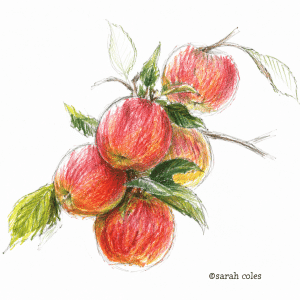
If October had an official fruit, surely it would be the apple.
British orchards are at their glorious best at this time of year, producing everything from crisp eating apples to wonderfully sharp cooking varieties.
And there is a world beyond the small handful of varieties we see all year round in supermarkets.
Farm shops, markets and pick-your-own orchards can turn up all sorts of treasures. Some are sweet and perfumed, some sharp enough to make your eyebrows meet your hairline, and some are absolutely destined for a crumble.
October is the time to use them generously.
Bake them whole with cinnamon and raisins. Stew them for porridge. Make apple sauce to serve with pork. Add slices to a cheese sandwich. Cook a crumble.
And if you have an apple tree producing more fruit than any reasonable household could possibly eat, leave a bag outside the front door with a sign saying FREE APPLES.
It’s practically an autumn tradition.
Pears
Pears don’t always get the attention apples receive, which seems rather unfair.
A perfectly ripe pear is one of autumn’s great pleasures: fragrant, juicy and soft enough to eat with a spoon.
The difficulty is catching it during the approximately eleven-minute window between still rock hard and why is there pear juice all over the fruit bowl?
British pears are in season around this time, with familiar varieties including Conference and Comice.
Eat them just as they are, poach them gently, bake them into puddings or slice them into salads with walnuts and blue cheese.
Pear and chocolate is also an excellent combination, should you require further research.
Quince
Now here’s an autumn fruit that deserves a little more attention.
A quince looks rather like an apple and pear have had a slightly lumpy child. Raw, it isn’t particularly inviting: hard, sour and not something you’d absent-mindedly bite into twice.
Cook it, though, and something rather magical happens.
The flesh softens, its perfume becomes more pronounced and the colour can deepen beautifully.
British quinces come into season from October and are particularly good for jellies and preserves because they’re naturally high in pectin.
Quince jelly with cheese is a very fine thing indeed.
And if you’ve never cooked one before, October is a good month to give it a go.
Pumpkins and squash
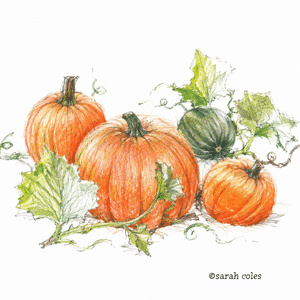
By October, squash season is in full swing.
And no, pumpkins are not merely decorative objects designed to sit outside the front door until 31 October before quietly collapsing.
They’re food.
Very good food.
Butternut squash is probably the one most of us know best, but look around farm shops and markets and you’ll find all sorts of beautiful varieties in green, orange, yellow and occasionally rather improbable shapes.
Roasting brings out their sweetness.
Cut into chunks, toss with a little oil and roast until caramelised at the edges. Add to curries, soups and risottos, mash with butter or stuff smaller squash and bake them whole.
If you’re carving a pumpkin for Halloween, use the flesh where you can rather than automatically throwing it away.
The seeds can be washed, dried, seasoned and roasted too.
One pumpkin. Three jobs: decoration, dinner and snack.
Efficient.
Beetroot
Beetroot is one of those vegetables that people tend either to adore or remember chiefly as something pickled that appeared beside salad cream in the 1970s.
It deserves another chance.
Fresh beetroot has a wonderfully earthy sweetness and is excellent roasted, particularly alongside carrots, parsnips and red onions.
It also works beautifully with goat’s cheese, feta, lentils and walnuts.
Just remember that beetroot has absolutely no respect for clothing, chopping boards, hands or pale-coloured kitchen surfaces.
Approach wearing something you don’t mind turning pink.
Carrots
Carrots may not seem particularly exciting because they’re available virtually all year, but they’re wonderful autumn cooking vegetables.
Roast them until their edges caramelise. Grate them into salads. Add them to stews. Make carrot and coriander soup. Mash them with swede.
Or simply scrub them, toss with oil and roast with a little honey and thyme.
There’s no need to peel a good fresh carrot unless you particularly want to.
A wash and scrub will often do nicely.
Less waste, less work.
I’m very much in favour of both.
Parsnips
Here come the parsnips.
Sweet, earthy and particularly good after roasting, they’re one of the vegetables that signal we’re heading towards the colder part of the year.
They work brilliantly in soups and stews, but roasting is where they really shine.
Cut them into chunky pieces and roast until golden and crisp around the edges.
Honey is lovely. Mustard is excellent. Parmesan works surprisingly well too.
And while they’ll inevitably become associated with Christmas dinner in a couple of months, there’s absolutely no reason to wait until December.
Parsnips don’t know it’s not Christmas.
Leeks
There is something deeply autumnal about a leek.
Perhaps it’s because they belong in exactly the sort of food we start craving when the temperature drops: soups, pies, gratins and big steaming bowls of something eaten with bread.
Leeks have a gentler flavour than onions and become beautifully sweet when cooked slowly.
Try them with potatoes in soup, bake them in a cheesy sauce, add them to a chicken pie or simply cook them gently in butter.
One warning: wash them properly.
Leeks are extremely talented at concealing half a field between their layers.
Cabbage
Cabbage has suffered from decades of overcooking.
Boiled until grey and apologetic, it isn’t surprising that generations of children viewed it with suspicion.
But cabbage deserves better.
Shred it finely and cook it quickly with butter and black pepper. Add it to stir-fries. Braise red cabbage slowly with apple. Make coleslaw. Add Savoy cabbage to soups and stews.
Good cabbage should still have some life left in it.
It shouldn’t need counselling.
Kale
October is also a good time to welcome darker leafy greens back into the kitchen.
Kale is robust enough to stand up to the sort of flavours autumn cooking brings with it.
Garlic, chilli, cheese, beans, sausages, lentils – kale gets along with all of them.
Remove any particularly tough stalks, chop the leaves and cook briefly rather than boiling them into submission.
You can also roast kale until crisp for an easy snack or topping.
Just be warned that kale crisps have a remarkable ability to shatter into approximately 8,000 pieces the moment you attempt to eat one.
Cauliflower
Cauliflower is another wonderfully versatile vegetable for cooler weather.
Roast it whole or in florets until browned at the edges. Turn it into soup. Add it to curry. Cover it in cheese sauce.
Cauliflower cheese beside a roast dinner is one of Britain’s finest contributions to civilisation and I will hear no arguments to the contrary.
And don’t automatically throw away the leaves.
The tender ones can be roasted alongside the cauliflower itself.
Broccoli
Broccoli is another reliable autumn vegetable and an easy way to add something green to dinner.
Steam it briefly, roast it until the edges catch, add it to pasta or stir it through a curry.
The stalk is edible too.
Peel away the tougher outside, slice the centre and cook it along with the florets.
There’s a surprising amount of food hiding in the bits we routinely throw away.
Potatoes
October cooking would be rather difficult without potatoes.
Mash them.
Bake them.
Roast them.
Turn them into soup, wedges, bubble and squeak or the top of a shepherd’s pie.
A baked potato on a cold evening, split open and filled with butter and cheese, is one of the cheapest comfort foods going.
Add baked beans and you’ve got a dinner that has been quietly doing sterling work in British kitchens for generations.
Onions and shallots
Not glamorous, perhaps, but indispensable.
Autumn onions and shallots form the starting point for an enormous amount of good cold-weather cooking.
Cook them slowly and their sharpness gives way to sweetness.
They’re the beginning of soups, casseroles, curries, gravies, pies and chutneys.
Caramelised onions with sausages and mash?
October on a plate.
Mushrooms
Autumn and mushrooms belong together.
Wild fungi begin appearing in woods and fields when conditions are right, while cultivated British mushrooms are readily available for our kitchens.
Fry mushrooms in butter with garlic and pile them onto toast.
Add them to risotto.
Turn them into soup.
Cook them with thyme and cream and spoon them over a baked potato.
If you’re tempted to forage for wild mushrooms, though, this is one area where enthusiasm isn’t enough.
Some poisonous species can be mistaken for edible ones, so only eat wild fungi when identification is absolutely certain and expert guidance has been followed.
A photograph is a perfectly good thing to bring home instead.
Blackberries
By October, blackberry season is nearing its end, but you may still find a few late berries in sheltered spots.
If you do, consider them a bonus.
The best may have gone, but late blackberries can still be cooked into crumbles, compotes and sauces.
Apple and blackberry is one of those combinations that makes perfect sense at this time of year because the two naturally overlap.
Nature has effectively done the recipe development for us.
Nuts
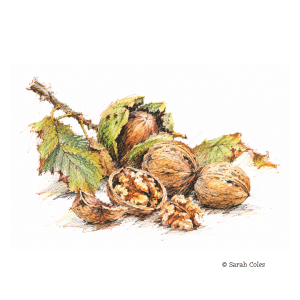
Autumn is nut season too.
Hazelnuts and cobnuts can be harvested around this part of the year, while sweet chestnuts begin appearing as autumn progresses.
Roasted chestnuts have become almost shorthand for cold-weather nostalgia, but they can also be added to stuffing, soups and vegetable dishes.
If collecting nuts in the wild, make sure you know what you’re picking and check local rules before taking anything.
And don’t confuse sweet chestnuts with horse chestnuts.
Conkers are for pockets and playground competitions.
They are emphatically not dinner.
Why bother eating seasonally?
These days we can buy strawberries in December and asparagus when there’s frost on the ground.
Convenient? Absolutely.
But it also makes it very easy to forget that food has seasons at all.
Eating more seasonally doesn’t mean becoming rigid about it. Nobody is going to confiscate your cucumber because it’s October.
It’s simply about noticing what’s plentiful and particularly good right now.
Seasonal produce can be better value when crops are abundant, and choosing British produce when it’s in season can mean food has travelled a shorter distance to reach us.
But I think there’s another reason that’s just as important.
It keeps food interesting.
An apple in October feels right in a way that an imported strawberry somehow doesn’t.
Squash soup tastes better when you’ve just come in from the cold.
The first parsnips of autumn are something to look forward to precisely because we haven’t been eating them every week since March.
The seasons give the kitchen a rhythm.
What to cook in October
If you’re wondering what to make with all this lovely produce, October is the month to bring back some old-fashioned, inexpensive cooking.
Think:
- apple and blackberry crumble
- roasted squash soup
- leek and potato soup
- cauliflower cheese
- sausage, apple and onion traybake
- mushroom risotto
- beetroot and goat’s cheese salad
- vegetable curry
- baked potatoes with proper fillings
- red cabbage braised with apple
- pear crumble
- root vegetable stew
- pumpkin curry
- apple cake
- roasted autumn vegetables with herbs
None of it needs to be complicated.
In fact, October ingredients are often at their best when we interfere with them as little as possible.
Roast things.
Bake things.
Put things in a large pot and leave them alone for a while.
Excellent seasonal cooking doesn’t always require tweezers and a foam.
How to shop seasonally without spending more
Seasonal eating can sound expensive when it’s presented as something involving artisan farmers’ markets and vegetables with soil still attached.
It doesn’t have to be.
Look at supermarket labels and see where produce has been grown. Compare prices rather than assuming British automatically means dearer. Visit a greengrocer or market towards closing time. Look for wonky vegetables. Buy larger bags of roots you’ll genuinely use.
And if you have access to a farm shop, pick-your-own or community growing scheme, October can be a wonderful time to visit.
Most importantly, buy what you’ll actually eat.
A locally grown organic swede isn’t sustainable if it spends three weeks in your fridge before being transferred solemnly to the bin.
A month to celebrate the harvest
There’s something rather lovely about the fact that we still talk about harvest in Britain.
For most of us, the closest we get to harvesting dinner is removing it from a supermarket trolley.
But October gives us a chance to reconnect the food on our plates with the fields, orchards and people it came from.
Apples have been picked.
Squashes have ripened.
Roots are coming out of the ground.
The kitchen is changing along with the weather.
So this month, look for British apples. Try a different squash. Rescue the humble cabbage from its boiled-to-death reputation. Buy a quince simply because you’ve never cooked one before.
And when the evening turns chilly, put something in the oven.
October has arrived.
We may as well eat it.
Further Reading: October Bucket List: Simple Things to Enjoy This Month, Autumn Walking: Why This Might Be the Best Season to Get Outside
Daily Inspiration: Instagram, Pinterest, Threads, Twitter, TikTok, BlueSky,