From jewel-bright rosehips and inky sloes to sweet chestnuts hidden beneath the leaves, October is one of the richest months in the British foraging calendar.
“Season of mists and mellow fruitfulness…”
— John Keats, To Autumn
There is something particularly satisfying about an October walk.
The frantic greens of summer have softened. Leaves are beginning to gather beneath the trees, mornings carry the first real chill of the year and hedgerows that might have seemed unremarkable a few months ago are suddenly hung with fruit.
October is the month when autumn begins to feel properly established. And for the forager, it can feel as though the countryside has laid out a final feast before winter.
This is the season of sloes and rosehips, wild plums and crab apples. Beneath mature trees, nuts tumble into the leaf litter. In damp woodland, fungi appear almost overnight.
Take a basket, pull on your boots and allow yourself to wander slowly. Foraging isn’t only about what you bring home. Half the pleasure lies in learning to notice what has always been there.
Before You Fill Your Basket
The best rule for foraging is a simple one: take a little and leave plenty behind.
Wild fruits, berries and nuts are valuable autumn food for birds, mammals and insects. Only gather common, abundant species, take what you genuinely intend to use and make sure you have permission to forage where necessary. Some protected sites have additional restrictions.
And identification matters. Never eat a wild plant, berry, nut or fungus unless you are completely certain what it is. Mushrooms deserve particular caution: Britain has both edible and poisonous species, sometimes with confusingly similar appearances.
With that in mind, here are some of October’s loveliest wild harvests.
Sloes
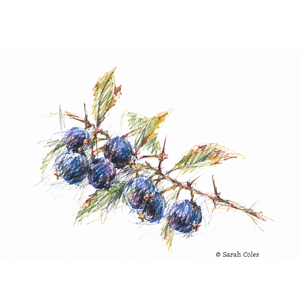
Few fruits announce autumn quite like the sloe. Look along old hedgerows and you’ll find the blue-black berries nestled among the formidable thorns of blackthorn.
Try one raw and you won’t quickly forget it. Sloes are intensely sharp and astringent, leaving your mouth feeling remarkably dry. But given sugar, patience and a little kitchen alchemy, they become something quite different.
Traditionally, people waited until the first frost before gathering sloes. There is some practical sense behind the old custom: freezing helps soften and split the fruit. Modern foragers needn’t wait for Jack Frost — a night or two in the freezer does the job nicely.
Try them: Make the classic sloe gin by combining washed or frozen sloes with gin and sugar, then leaving the bottle somewhere dark for several months, turning it occasionally.
For something different, simmer sloes into a rich jelly to serve with cold meats and cheese.
And don’t overlook the leftover gin-soaked fruit. Once strained and safely separated from the stones, the fruit can be used to add a boozy, autumnal note to puddings.
Rosehips
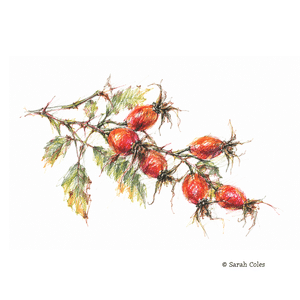
When the flowers of the dog rose disappear, they leave behind one of the hedgerow’s brightest autumn treasures.
Rosehips ripen from orange into brilliant scarlet and deep red, glowing against increasingly bare branches.
They also have an interesting place in British food history. During the Second World War, when imported citrus fruit was scarce, people were encouraged to gather rosehips as a home-grown source of vitamin C.
Anyone who remembers a mischievous childhood may know another use for them. The tiny hairs surrounding the seeds were once employed as homemade itching powder — which is also a good reminder that rosehips need careful preparation and straining before eating.
Try them: Make rosehip syrup. Simmer chopped hips in water, strain very carefully through a jelly bag or fine cloth, then reduce the liquid with sugar.
Drizzle the finished syrup over porridge, pancakes or vanilla ice cream, or add a spoonful to sparkling water.
Crab Apples
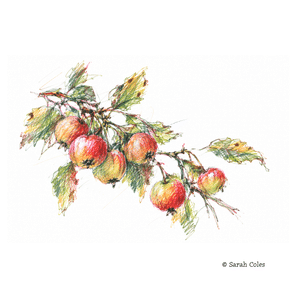
A wild crab apple tree in October is a lovely thing. Its small fruits can range from green and gold to rosy red, sometimes remaining on the branches long after cultivated apples have fallen.
Bite into one raw and its sharpness may make you reconsider. Cook it, however, and the crab apple becomes one of the most useful fruits in the autumn kitchen.
Naturally rich in pectin, crab apples are particularly good for preserves and can help other low-pectin fruits to set.
Try them: Make jewel-clear crab apple jelly. Cook whole crab apples with water until soft, then leave them to drip overnight through a jelly bag. Resist squeezing the bag if you want beautifully clear jelly.
Measure the juice, add sugar and boil to setting point.
Add rosemary, sage or a little chilli for a savoury version that’s excellent alongside roast pork or a strong Cheddar.
Sweet Chestnuts
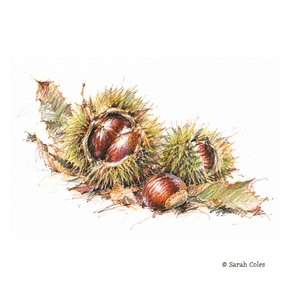
There are few sounds more evocative of an October woodland than the crunch of leaves underfoot — followed by the discovery of a prickly chestnut case among them.
Sweet chestnuts begin falling in autumn, with the best crops often found beneath large, mature trees. After windy weather is a particularly good time to look, as ripe cases may already have split open.
Be certain you’ve found sweet chestnut, rather than horse chestnut or conkers. They are not interchangeable, and conkers should not be eaten.
Try them: Roasting is hard to beat. Cut a cross into the shell before cooking — an important step that helps prevent chestnuts bursting as they heat. Roast until the shells peel back and the flesh inside is tender.
Eat them warm from the oven, or crumble the cooked chestnuts into an autumn stuffing with breadcrumbs, sage, onion and plenty of black pepper.
For pudding, chestnut purée with cream and dark chocolate is gloriously old-fashioned.
Hazelnuts
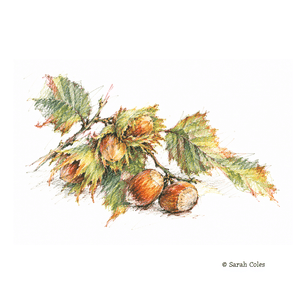
You may need to compete with the squirrels for this one.
Hazelnuts — also called cobnuts or filberts — have been eaten in Britain for thousands of years. By October the shells are turning brown and ripe nuts should come away readily from their papery husks.
The empty shells scattered beneath a hazel can tell their own story. Wood mice, squirrels and woodland birds all enjoy them, each leaving characteristic marks behind.
Try them: Roast shelled hazelnuts until fragrant, then roughly chop them and scatter over baked apples with honey and oats.
Or blitz roasted nuts into homemade hazelnut butter. A spoonful stirred into warm porridge with sliced pear makes a very good breakfast after a cold morning walk.
Bullace
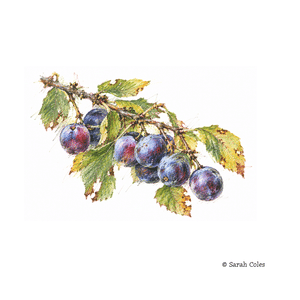
Less famous than the sloe but every bit as deserving of a place in the autumn kitchen, bullace is a type of wild plum.
Its fruits vary considerably, often appearing blue, purple or almost black. Bullace can continue ripening well into autumn, making it a rewarding late-season find.
The flavour can be distinctly tart, particularly before the fruit is fully ripe, but cooking transforms it.
Try them: Treat bullace much as you would damsons. Stone the fruit and bake beneath a buttery crumble topping, turn it into jam or gently stew it with sugar and autumn spices.
For an easy pudding, spoon warm stewed bullace over thick yoghurt and finish with toasted hazelnuts.
Walnuts
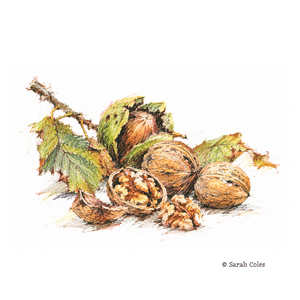
Walnuts feel rather like buried treasure.
The familiar shell begins life hidden inside a fleshy green husk. As autumn advances, that outer covering darkens and splits to reveal the nut inside.
Walnut isn’t native to Britain, but established trees have been part of our landscape for centuries and can be found in parks, old gardens and around former estates.
One practical warning: the outer husks can stain hands and clothing remarkably effectively.
Try them: Fresh walnuts have a softer, more delicate character than the dried ones we usually buy. Eat them with a good British blue cheese and slices of pear or apple.
Or make a simple walnut pesto with toasted walnuts, parsley, garlic, hard cheese and rapeseed or olive oil. Spoon it over roasted squash or stir through pasta.
Haws
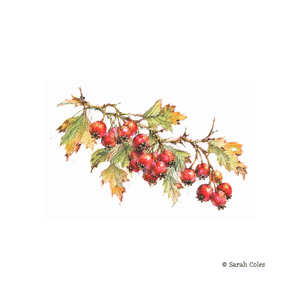
The small red fruits of the hawthorn are known simply as haws, and by October they can cover hedgerows in astonishing numbers.
Raw, they’re unlikely to become anyone’s favourite fruit — the flesh is rather dry and the stone occupies much of the centre. But our ancestors were resourceful with them, and cooking reveals their usefulness.
Hawthorn itself has a rich seam of British folklore attached to it. For centuries it was associated with boundaries, May Day traditions and the supernatural. One old superstition warned against bringing flowering hawthorn indoors, where it was thought to bring misfortune.
The berries, however, belong firmly in the autumn preserving pan.
Try them: Make hawthorn ketchup. Simmer haws until soft, sieve away the stones, then cook the resulting pulp with vinegar, brown sugar and warming spices.
The result is a tangy, fruity condiment particularly good with sausages, roast vegetables and cheese.
The Last Blackberries
By October, blackberry season is reaching its final chapter.
The plump, glossy berries of August and September may be harder to find, but sheltered hedges can still carry good fruit in early October.
There is also a wonderfully gloomy piece of British folklore surrounding late blackberries. In various traditions, the Devil is said to spoil the berries after Michaelmas — sometimes by spitting on them, sometimes by stamping on them.
Behind the story lies sensible seasonal observation. As autumn progresses, berries become increasingly weathered, mouldy and unappealing. Folklore had a memorable way of telling people when nature’s pantry was beginning to close.
Try them: If you find sound late berries, combine them with cooking apples for a proper autumn crumble.
Add a handful of toasted hazelnuts to the topping and serve it hot with custard.
And Then There Are Mushrooms…
October’s combination of cooler temperatures, damp soil and fallen leaves makes it one of Britain’s great months for fungi.
A woodland walk can reveal tiny bonnets, colourful waxcaps and enormous bracket fungi seemingly appearing overnight.
But fungi require considerably more knowledge than picking blackberries.
Some British mushrooms are poisonous, and edible species can have dangerous lookalikes. For beginners, fungi are therefore better approached first as something to discover rather than dinner.
Go on an organised fungal foray with an experienced expert, learn how identification works and enjoy noticing the extraordinary variety beneath your feet. Never rely solely on photographs, apps or a single identifying feature when deciding whether a mushroom is edible.
There is pleasure enough simply in finding them.
An October Hedgerow Supper
Perhaps the nicest thing about October foraging is that you don’t need a basket overflowing with wild food.
A handful is often enough.
Imagine coming home as the afternoon light begins to disappear: chestnuts roasting in the oven; crab apple jelly beside a wedge of mature Cheddar; sausages with hawthorn ketchup; an apple and blackberry crumble bubbling at the edges.
Later in the year, there might be a bottle of sloe gin opened beside the fire.
The ingredients themselves are simple. What makes them special is remembering exactly where they came from.
That crooked blackthorn at the edge of a field. The chestnut tree discovered on a Sunday walk. The rosehips glowing red along a familiar footpath.
Foraging makes a landscape more intimate. You begin to recognise individual trees, notice when fruits ripen and understand why a hedgerow matters to the creatures that depend upon it.
So take only a share.
The blackbirds, fieldfares, mice, squirrels and countless less-visible inhabitants of the countryside have an autumn pantry to fill too.
And when your basket has enough in it, stop gathering.
There is always another pleasure in an October walk: simply looking.
Further Reading: October Bucket List: Simple Things to Enjoy This Month, Autumn Walking: Why This Might Be the Best Season to Get Outside, What’s in Season in October? A Guide to Britain’s Autumn Harvest
Daily Inspiration: Instagram, Pinterest, Threads, Twitter, TikTok, BlueSky