There is something particularly special about June. The countryside seems to settle into its summer rhythm, hedgerows burst into flower, and gardens begin to reward months of careful tending. Market stalls fill with colour, kitchen gardens become increasingly productive and many of Britain’s most-loved fruits and vegetables reach their finest moment of the year.
Eating seasonally is one of the simplest ways to enjoy produce at its best. Ingredients harvested at the right time tend to offer deeper flavour, better texture and all the freshness that comes from travelling a shorter distance from field to plate. They also invite us to cook differently, taking inspiration from what nature is providing rather than relying on the same ingredients all year round.
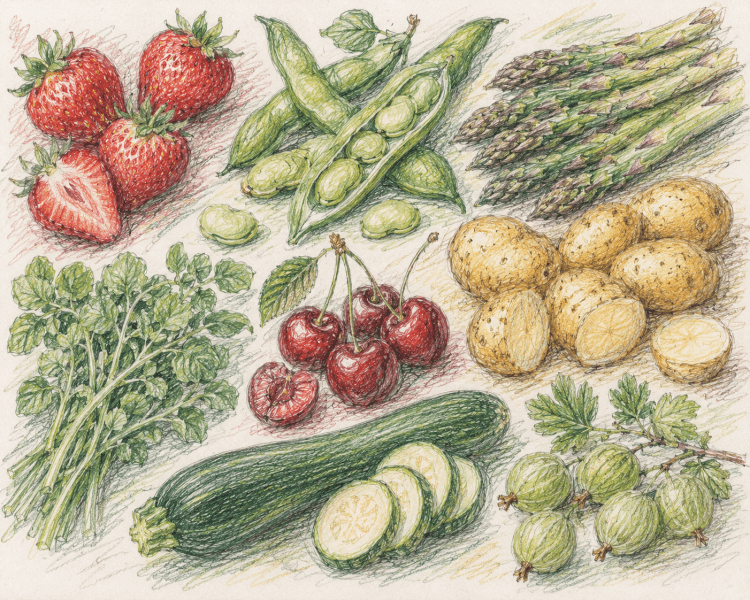
This June, a wealth of seasonal produce is waiting to be discovered. From sweet berries and tender greens to traditional British favourites that have graced summer tables for generations, these ingredients offer countless opportunities to bring the season into your kitchen.
Strawberries: the taste of early summer
For many people, the arrival of British strawberries marks the true beginning of summer. Their fragrance alone is enough to transport you to sunny afternoons, garden gatherings and countryside walks. Unlike strawberries grown out of season, June berries develop their sweetness naturally, resulting in fruit that is juicy, intensely flavoured and wonderfully aromatic.
Strawberries are rich in vitamin C and naturally packed with antioxidants, making them as nourishing as they are delicious. Their bright colour and fresh flavour also make them remarkably versatile, working just as well in savoury dishes as they do in desserts.
One of the most rewarding ways to enjoy them is by roasting them gently. Heat can deepen their sweetness and create a rich, almost jam-like flavour.
A roasted strawberry and honey ricotta tart makes a delightful seasonal centrepiece. Simply bake a sweet pastry case until golden, then fill it with ricotta blended with local honey and a touch of vanilla. Arrange lightly roasted strawberries over the top and finish with fresh mint leaves. The result is elegant yet uncomplicated, allowing the fruit to remain the star of the dish.
Broad beans: a garden classic worth celebrating
Broad beans have been grown in Britain for centuries and remain one of the most satisfying crops of early summer. Freshly picked broad beans bear little resemblance to the dried versions often associated with winter cooking. Instead, they are tender, sweet and delicately nutty.
Rich in plant protein, fibre and folate, they offer both flavour and substance. Their vibrant green colour also brings life to seasonal dishes, capturing the freshness of June in every spoonful.
A broad bean, pea and mint risotto is a perfect way to showcase their character. As the rice slowly absorbs the stock, the beans soften while retaining their gentle sweetness. Fresh mint lifts the entire dish, creating a meal that feels light enough for summer yet comforting enough for cooler evenings.
Served with a crisp salad and a glass of chilled elderflower cordial, it becomes a celebration of the season’s green abundance.
Asparagus: a fleeting seasonal treasure
The British asparagus season is famously short, which perhaps explains why it remains so eagerly anticipated each year. By June, the final weeks of the harvest are often underway, making it the perfect time to enjoy this much-loved vegetable while it is still at its peak.
Asparagus is naturally rich in folate and vitamin K, while its delicate flavour means it requires very little preparation. Many cooks would argue that the simpler the treatment, the better the result.
Chargrilling asparagus allows its natural sweetness to develop while adding subtle smoky notes. Served with lemon and herb butter, it makes an effortless starter or side dish. The combination of bright citrus, fresh herbs and tender spears highlights everything that makes British asparagus so special.
It is a reminder that some of the finest seasonal foods require little more than careful cooking and good ingredients.
New potatoes: simple pleasures from the soil
There is a certain joy in lifting the first new potatoes of the year. Their skins are paper-thin, their flesh creamy and their flavour remarkably fresh.
Unlike larger storage potatoes, new potatoes are harvested while still young, giving them a naturally delicate texture. They provide slow-release energy and valuable nutrients, but perhaps their greatest appeal lies in their simplicity.
A warm new potato salad with watercress captures the essence of June cooking. Tossing freshly cooked potatoes with a mustard dressing while they are still warm allows them to absorb every flavour. Peppery watercress adds contrast and freshness, creating a dish that feels equally at home at a picnic, garden lunch or family supper.
It is proof that seasonal cooking does not need to be elaborate to be memorable.
Watercress: one of Britain’s most remarkable leaves
Flowing chalk streams across southern England have supported watercress cultivation for generations. This vibrant leafy green has a distinctive peppery flavour that brings character to a wide range of dishes.
Watercress is often described as one of the most nutrient-dense vegetables available, offering an impressive range of vitamins and minerals despite its delicate appearance. Its crisp texture and fresh taste make it particularly appealing during the warmer months.
A simple watercress and pea soup showcases its qualities beautifully. The sweetness of peas balances the gentle pepperiness of the leaves, creating a silky soup with a striking green colour. Served warm on a cool June evening or chilled on a sunny afternoon, it feels both refreshing and satisfying.
Cherries: nature’s summer jewels
The first British cherries of the season are always worth waiting for. Glossy, richly coloured and bursting with juice, they bring a sense of celebration wherever they appear.
Beyond their beauty, cherries contain valuable antioxidants that contribute to their deep red colour. Their balance of sweetness and acidity makes them ideal for both baking and eating fresh from the bowl.
A cherry and almond crumble offers a delicious twist on a traditional favourite. As the fruit softens in the oven, its juices mingle with the buttery topping and nutty almonds. Served warm with custard or cream, it captures the comforting side of summer cooking.
Few puddings feel more inviting after a day spent outdoors.
Courgettes: the generous gift of summer gardens
By June, courgette plants begin producing enthusiastically, often rewarding gardeners with more fruit than they know what to do with. Fortunately, their versatility means there is no shortage of ways to enjoy them.
Courgettes are light, refreshing and naturally hydrating, making them particularly welcome during warmer weather. Their mild flavour allows them to absorb herbs, cheeses and seasonings beautifully.
A courgette and goat’s cheese galette is an excellent example. Layers of tender courgette rest on creamy goat’s cheese, all wrapped within crisp pastry. Fragrant thyme adds a gentle earthiness that complements the vegetable perfectly.
Served warm or at room temperature, it makes a wonderful addition to summer picnics and relaxed outdoor meals.
Gooseberries: Britain’s underrated summer fruit
Before strawberries and raspberries became widely available, gooseberries were among the stars of the British summer garden. Their distinctive sharpness remains unlike any other fruit, offering a refreshing contrast to sweeter seasonal harvests.
Rich in fibre and vitamin C, gooseberries have long been prized for both their flavour and versatility. Their tartness pairs particularly well with creamy ingredients, creating desserts that feel balanced rather than overly sweet.
A gooseberry and elderflower fool brings together two flavours synonymous with the British countryside. The floral notes of elderflower soften the fruit’s sharp edge, while cream and yoghurt add richness without overwhelming its character.
The result is a dessert that feels timeless, rooted in tradition yet perfectly suited to modern tastes.
Bringing the season home
June offers a brief but beautiful window into some of Britain’s finest produce. These ingredients arrive at a time when gardens are flourishing, hedgerows are alive with colour and long evenings encourage us to gather around the table with family and friends.
Whether it is the sweetness of strawberries, the freshness of broad beans or the sharp tang of gooseberries, each ingredient tells its own story about the landscape and season from which it comes. Choosing them now means enjoying them at their very best, while also supporting a more natural rhythm of eating throughout the year.
As summer unfolds, there are few greater pleasures than bringing home a basket of seasonal produce and allowing the flavours of June to inspire what comes next.
Further Reading: What Is in Season in June?, What to Forage in June
Daily Inspiration: Instagram, Pinterest, Threads, Twitter, TikTok, BlueSky