There’s a quiet shift in May. The sharp edges of early spring soften, and the land settles into something more generous. Hedgerows thicken, gardens hum, and markets begin to reflect a deeper palette of greens, soft fruits, and tender shoots. It’s a month of promise—where the first harvests feel like a reward for patience.
Eating seasonally in May isn’t just about flavour (though it’s hard to beat); it’s about rhythm. It’s about understanding what the land is ready to give, and enjoying it at its very best.
Below, you’ll find a thoughtfully gathered guide to what’s in season in May in the UK—each with its story, benefits, and a simple way to bring it to the table.
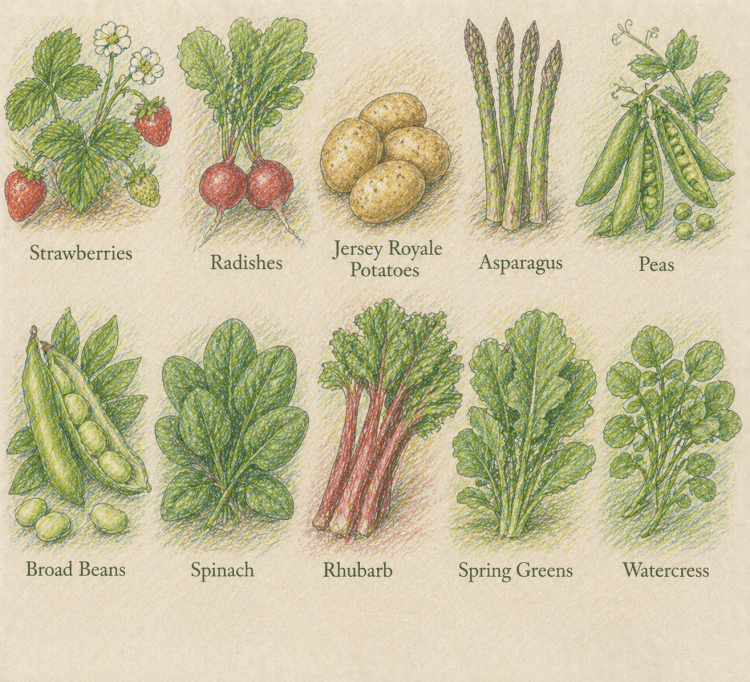
Asparagus
Few ingredients capture the essence of May quite like asparagus. Its season is fleeting—traditionally from St George’s Day (23 April) to Midsummer—making it all the more treasured.
A little history:
The Romans prized asparagus, and it has been cultivated in Britain for centuries. Once considered a luxury, it remains a symbol of seasonal eating at its finest.
Nutritional benefits:
Rich in folate, fibre, and vitamins A, C, and K, asparagus supports digestion and overall vitality.
Simple recipe:
Roast asparagus with olive oil, sea salt, and a squeeze of lemon. Finish with shaved parmesan. Simple, and perfect.
Jersey Royal Potatoes
Earthy, nutty, and unmistakably British, Jersey Royals are the first true new potatoes of the year.
A little history:
Grown on the island of Jersey since the 19th century, their unique flavour comes from the seaweed fertiliser traditionally used on the fields.
Nutritional benefits:
A good source of potassium, vitamin C, and energy-giving carbohydrates.
Simple recipe:
Boil gently, toss with butter and fresh mint. Nothing more is needed.
Peas (Early Season)
Sweet, bright, and full of life, early peas are a joy of late spring.
A little history:
Once dried for storage, fresh peas became popular in Britain during the 17th century and were considered a delicacy.
Nutritional benefits:
High in plant protein, fibre, and vitamins B and C.
Simple recipe:
Lightly steam and toss with butter, mint, and a pinch of salt. Or blend into a fresh pea and mint soup.
Broad Beans
Broad beans arrive with a sense of substance—plump, pale green, and deeply satisfying.
A little history:
One of the oldest cultivated plants, broad beans were eaten in Britain long before the Romans arrived.
Nutritional benefits:
Rich in protein, fibre, and folate.
Simple recipe:
Blanch, peel, and toss with olive oil, lemon zest, and pecorino cheese.
Radishes
Crisp and peppery, radishes add a lively bite to spring dishes.
A little history:
Radishes have been cultivated since ancient Egypt and were valued for their quick growth.
Nutritional benefits:
Low in calories, high in vitamin C, and great for digestion.
Simple recipe:
Slice thinly and serve with butter and sea salt on fresh bread—a French classic.
Spinach
Tender and vibrant, spring spinach is far sweeter than its winter counterpart.
A little history:
Introduced to Europe from Persia, spinach became widely used in British cooking by the 16th century.
Nutritional benefits:
Packed with iron, calcium, and antioxidants.
Simple recipe:
Wilt gently with garlic and olive oil, finish with a squeeze of lemon.
Strawberries (Early UK Crops)
The first British strawberries begin to appear in May—sweet, fragrant, and long-awaited.
A little history:
Strawberries have been enjoyed in Britain since medieval times, often paired with cream.
Nutritional benefits:
High in vitamin C, antioxidants, and naturally refreshing.
Simple recipe:
Serve simply with cream, or macerate with sugar and a splash of balsamic for depth.
Rhubarb
Sharp, vibrant, and unmistakable, rhubarb bridges the gap between fruit and vegetable.
A little history:
Originally used medicinally, rhubarb became a culinary staple in Britain in the 18th century.
Nutritional benefits:
Low in calories, rich in fibre and vitamin K.
Simple recipe:
Stew gently with sugar and orange zest. Perfect with yoghurt or porridge.
Spring Greens (Cabbage)
Often overlooked, spring greens are tender, sweet, and deeply nourishing.
A little history:
A staple of British kitchens for centuries, valued for their resilience and versatility.
Nutritional benefits:
High in vitamins C and K, and excellent for gut health.
Simple recipe:
Shred and sauté with garlic, butter, and a splash of stock.
Watercress
Peppery and fresh, watercress thrives in clean, flowing water.
A little history:
Once called “poor man’s bread,” watercress was a staple for its high nutrient content.
Nutritional benefits:
Rich in iron, calcium, and antioxidants.
Simple recipe:
Blend into a classic watercress soup or toss into salads for a peppery kick.
A Final Thought
May reminds us that good things take time. The first harvests are never rushed—they arrive when they’re ready, shaped by soil, sunlight, and care.
Choosing seasonal produce isn’t just about taste or nutrition. It’s a quieter kind of appreciation. A way of eating that honours the land, supports local growers, and reconnects us with the simple pleasure of food at its best.
Further Reading: The Art of Foraging: Discovering Nature’s Larder, Discover Nature’s Bounty Foraging for Food and Fun, What to Forage in May: Nature’s Spring Larder
Inspiration: Instagram, TikTok, Threads, Pinterest, Twitter, BlueSky