There is something rather comforting about stepping into a garden or along a hedgerow and realising that what grows there is not only beautiful, but quietly nourishing too.
Edible flowers have long been part of traditional kitchens—gathered in small handfuls, stirred into simple recipes, and appreciated as much for their healing qualities as for their charm. From the cheerful dandelion pushing through a path to the soft scent of lavender on a warm afternoon, these plants offer a slower, more thoughtful way to cook and care for ourselves.
What follows is a gentle guide to some of the most familiar edible flowers—how to recognise them, what they offer, and simple ways to bring them into your kitchen.
Dandelion – Sunshine at Your Feet
(Taraxacum officinale)
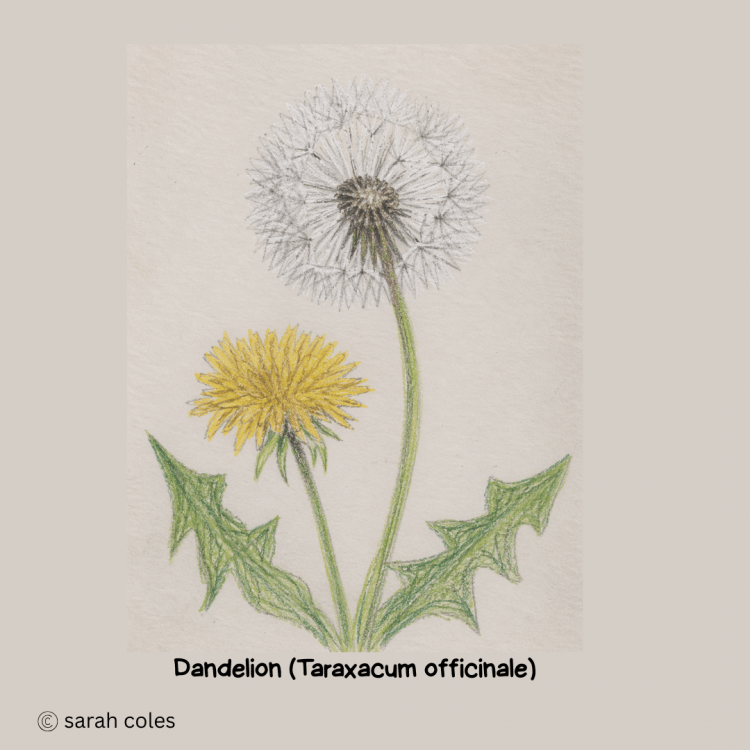
You’ll find dandelions almost anywhere—dotting lawns, lining paths, catching the light in early spring. Their bright yellow heads feel like small pieces of sunshine, often overlooked but quietly abundant.
Nutritionally, dandelions are rich in vitamins A, C and K, along with iron and potassium. Traditionally, they’ve been valued for supporting digestion and overall vitality.
A simple way to use them:
Try making dandelion honey. Simmer the petals gently with slices of lemon, strain, then reduce with sugar until golden and syrupy. It’s a lovely alternative to honey, with a soft, floral sweetness.
“Weeds are flowers too, once you get to know them.”
Parsley – More Than a Garnish
(Petroselinum crispum)
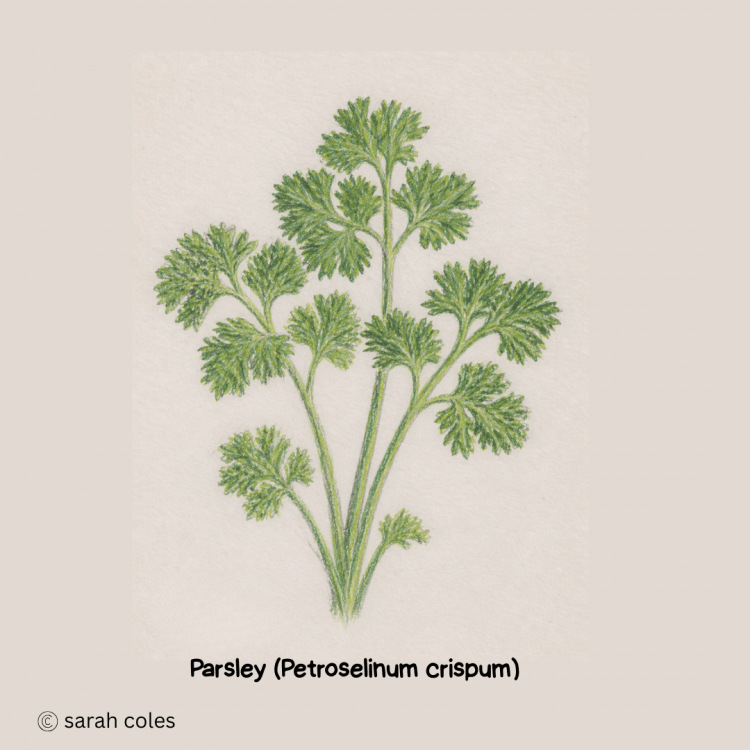
Often tucked at the edge of a plate, parsley rarely takes centre stage. Yet when left to grow, it produces delicate umbels of flowers and offers far more than decoration.
Packed with vitamin C, vitamin K and antioxidants, parsley supports immune health and brings freshness to everyday meals.
In the kitchen:
Blend parsley leaves and flowers with garlic, nuts and olive oil for a simple pesto. Spoon over warm potatoes or stir through pasta.
“Parsley, sage, rosemary and thyme…” — a line that has travelled through generations.
Borage – A Star in the Garden
(Borago officinalis)
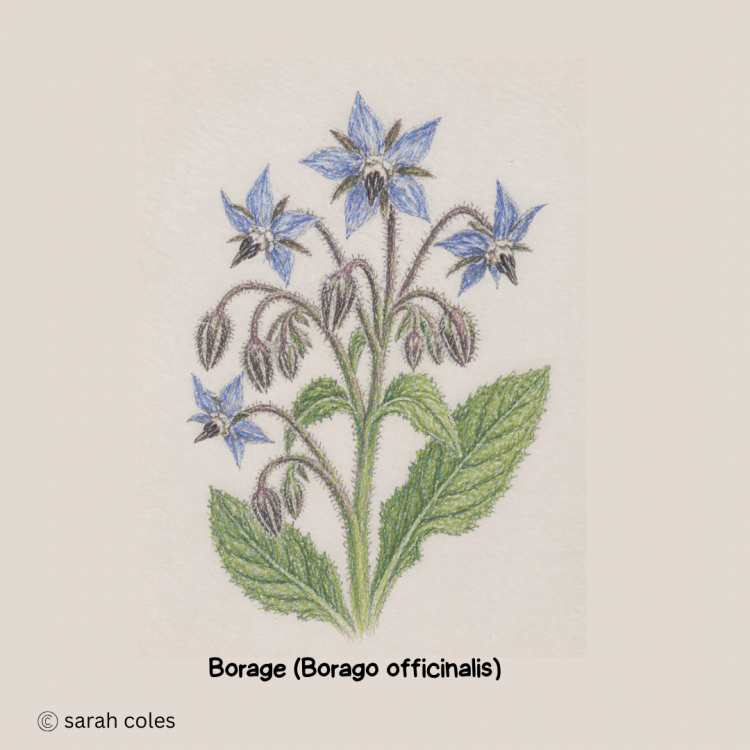
Borage is hard to miss once you know it—its vivid blue, star-shaped flowers drawing bees in abundance. There’s a lightness to it, both in appearance and flavour.
Traditionally associated with lifting the spirits, borage contains trace minerals and has long been used in summer drinks.
A simple touch:
Freeze the flowers into ice cubes. Dropped into a glass of water or cordial, they bring a quiet sense of occasion to even the simplest drink.
“Borage for courage,” as the old saying goes.
Violet – Quiet and Sweet
(Viola odorata)
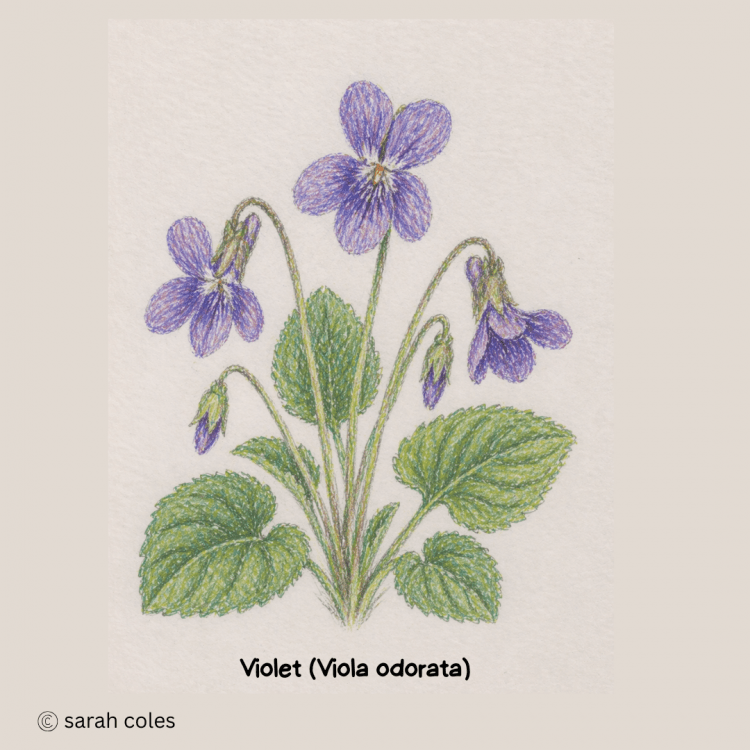
Violets don’t demand attention. They sit low to the ground, often half-hidden, their scent discovered before they are seen.
Rich in vitamin C and gentle antioxidants, they’ve been used in soothing remedies for generations.
In the kitchen:
Crystallised violets make a delicate decoration. Lightly coat each petal, dust with sugar, and leave to dry—simple, but rather lovely.
“A violet by a mossy stone…” — William Wordsworth
Rose – Fragrance and Tradition
(Rosa spp.)
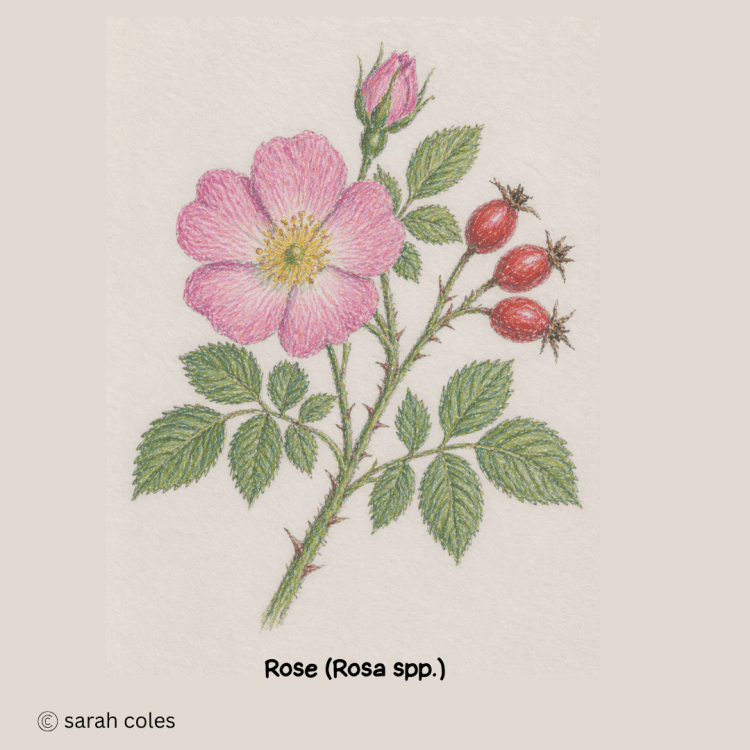
The rose carries centuries of stories with it. From wild hedgerows to carefully tended gardens, its petals and hips offer both beauty and nourishment.
Rose petals contain antioxidants, while rose hips are known for their high vitamin C content.
A classic recipe:
Rose petal jam, gently simmered with sugar and lemon, captures the scent of summer in a jar.
“A rose by any other name would smell as sweet.” — William Shakespeare
Red Clover – Meadow Sweetness
(Trifolium pratense)
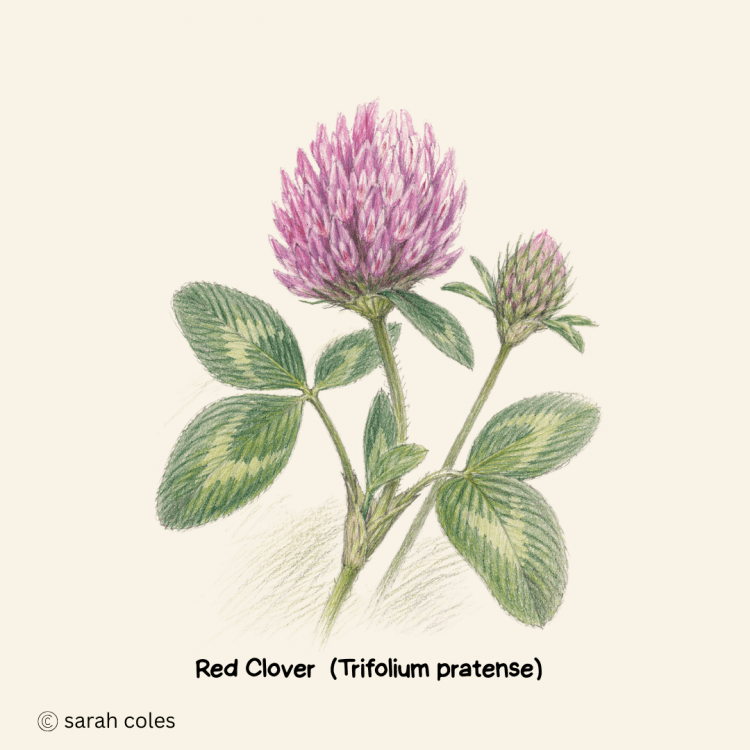
Walk through a meadow in summer and you’ll likely brush past red clover, its soft pink heads alive with bees.
It contains isoflavones and minerals, often linked to natural balance within the body.
To enjoy:
Steep the dried flowers for a gentle herbal tea—mild, slightly sweet, and easy to return to.
Marshmallow – Soft and Soothing
(Althaea officinalis)
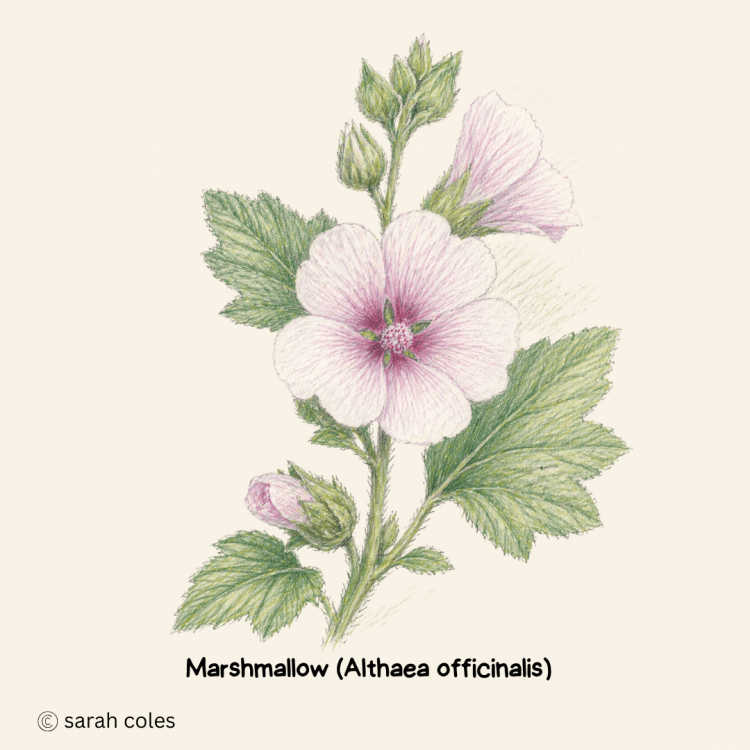
Tall and understated, marshmallow grows in damper ground, its pale flowers offering a quiet kind of beauty.
It’s rich in mucilage, known for its soothing qualities—particularly for the throat and digestion.
A traditional preparation:
A cold infusion of the root creates a soft, calming drink, long valued in herbal practice.
Lavender – Calm in Bloom
(Lavandula angustifolia)
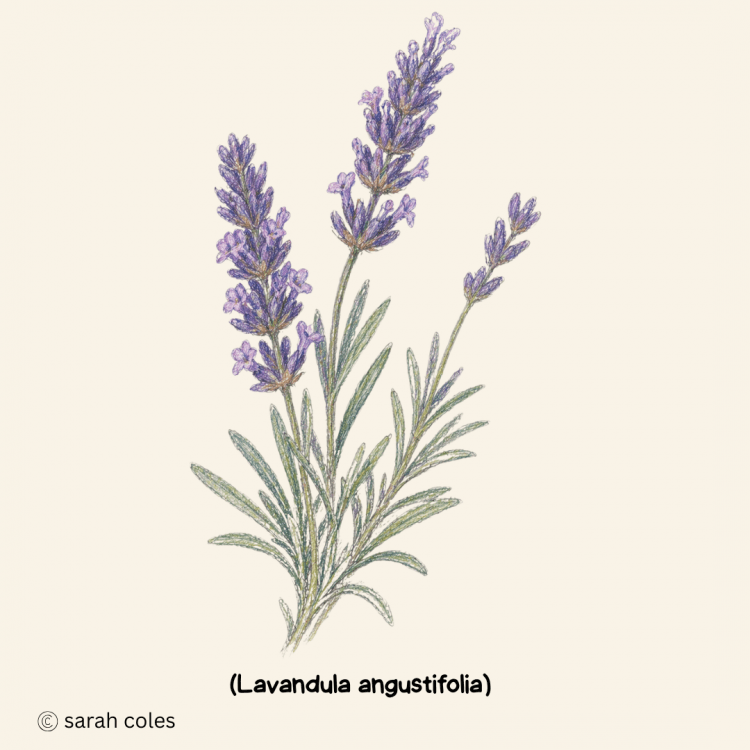
Few plants are as instantly recognisable. Lavender’s scent drifts easily on warm air, bringing with it a sense of stillness.
With gentle antioxidant properties, it’s often associated with rest and relaxation.
In the kitchen:
Add a small pinch of dried lavender to shortbread for a subtle floral note—never too much, just enough to notice.
“Lavender’s blue…” — a line carried through folk song and memory.
Hollyhock – A Cottage Garden Favourite
(Alcea rosea)
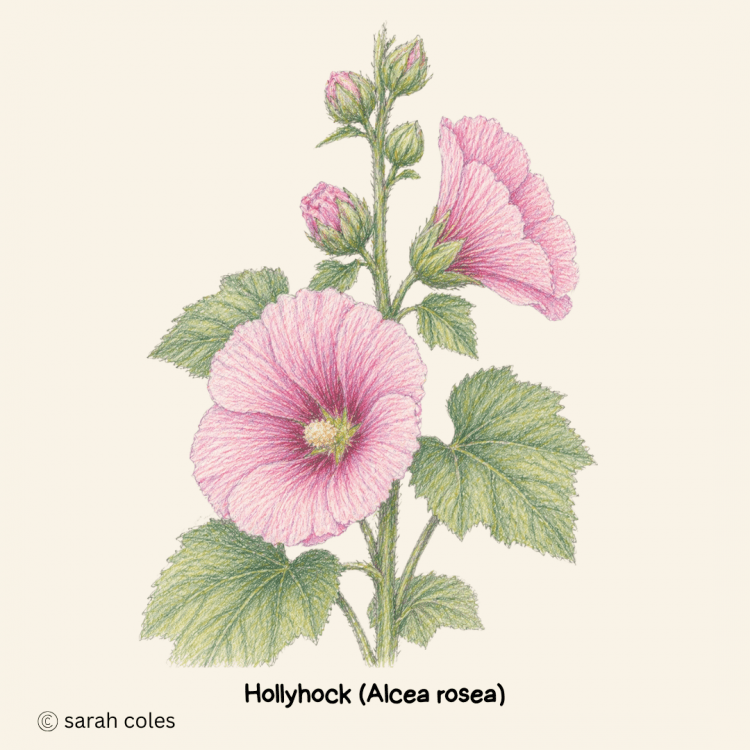
Standing tall against walls and fences, hollyhocks feel like part of the story of old gardens. Their petals are soft, almost paper-like.
Traditionally used for their soothing properties, they share qualities with marshmallow.
A simple use:
Scatter the petals over salads for colour and a gentle sweetness.
Gathering Gently
Edible flowers offer more than flavour. They invite us to slow down, to notice what grows around us, and to use it with care. Whether picked from your own garden or grown with intention, they bring a sense of connection—to the seasons, to the landscape, and to simpler ways of living.
In a world that often moves too quickly, there is something quietly reassuring about returning to these small, natural rituals.
Kind to the body. Gentle on the purse. And always, if gathered thoughtfully, a pleasure to share.
Further Reading: Foraging in April: Return to the Hedgerows, What’s in Season in April, Hemlock: A walker’s guide to Britain’s beautiful but deadly plant
Inspiration: Instagram, TikTok, Threads, Pinterest, Twitter, BlueSky