There is a particular kind of richness that belongs only to July.
The hedgerows are full now. Meadows sway beneath long grasses sprinkled with wildflowers, woodland edges soften beneath tangled green growth, and every country lane seems to offer something worth pausing for. Bees hum lazily through bramble blossom, butterflies drift between knapweed and oxeye daisies, while the warm air carries the unmistakable scent of summer.
This is perhaps the most generous month for anyone who enjoys foraging.
Not because everything is ready to harvest at once, but because every walk offers possibility. A handful of fragrant herbs here, a scattering of berries there, perhaps a few edible flowers tucked quietly into an old stone wall. Nature never hurries, yet somehow everything arrives exactly when it should.
Foraging has always asked something of us before it gives.
It asks us to slow down.
To notice.
To learn the difference between one leaf and another, one flower and the next. It reminds us that the countryside is not simply scenery to pass through but a living larder that has quietly sustained people for thousands of years.
The old country saying still rings true.
“Take only what you need, and always leave enough for nature.”
It remains one of the finest rules any forager can follow.
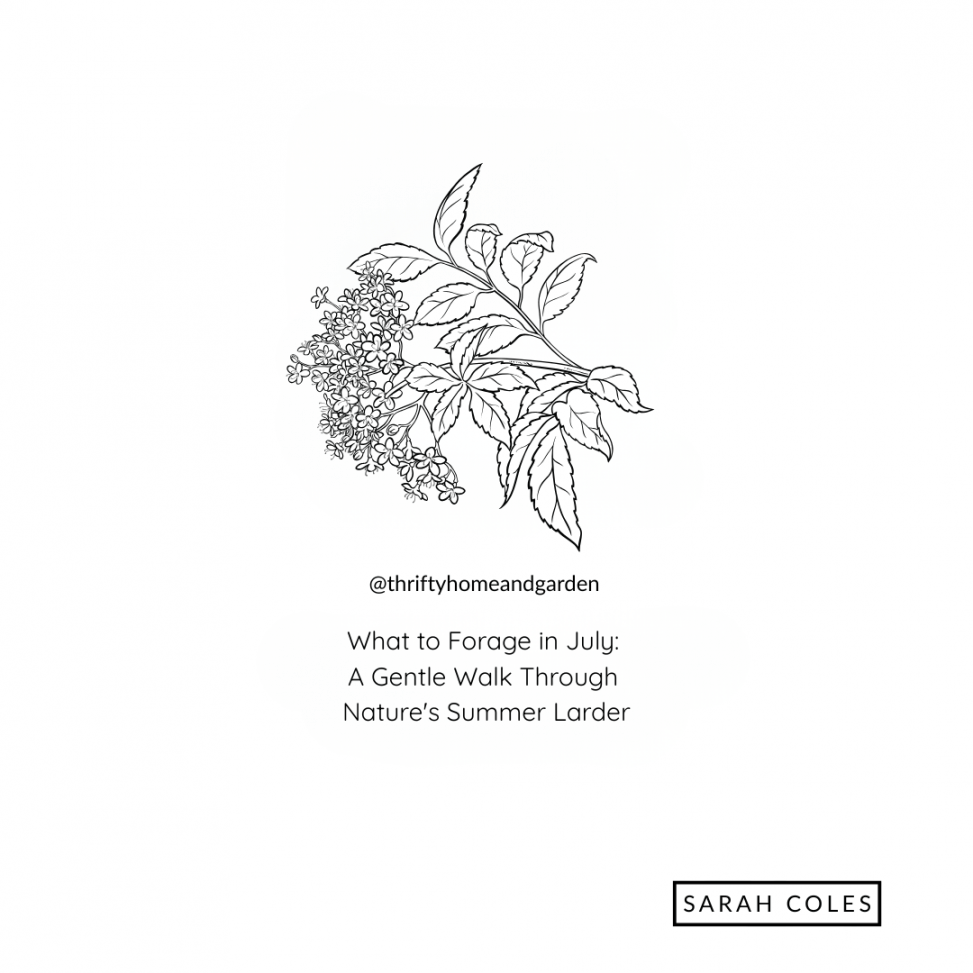
Elderflowers Have Become Elderberries
By July, the frothy white elderflowers of early summer have almost disappeared.
In their place, tiny green berries begin forming in heavy clusters that will slowly ripen into glossy black elderberries later in the season. Although the berries are not yet ready to harvest, July offers a wonderful opportunity to learn where elder trees grow before autumn arrives.
For centuries, the elder tree has occupied a special place in folklore. It was often believed to protect homes from bad luck, while cutting one down without permission from the “Elder Mother” was thought to bring misfortune.
It is a reminder that our ancestors viewed nature with both respect and gratitude.
Wild Raspberries Hide in Plain Sight
If you venture along sunny woodland rides or old hedgerows, you may discover delicate wild raspberries beginning to ripen.
Smaller than cultivated varieties, they more than compensate with extraordinary flavour.
Packed with vitamin C, manganese and antioxidants, they are one of nature’s sweetest rewards.
Scatter them over porridge, bake them into muffins or simply enjoy them warm from the bush while admiring the view.
Sometimes that is recipe enough.
Meadowsweet Perfumes the Air
Long before you see it, you’ll often smell it.
Meadowsweet fills damp meadows and riverbanks with an unmistakably sweet, almond-like fragrance throughout July.
Its creamy flower heads have been used for centuries to flavour wines, vinegars, desserts and cordials.
More remarkably still, meadowsweet contains salicylates, compounds that inspired the development of aspirin. Its botanical name, Filipendula ulmaria, hides an extraordinary story of traditional herbal medicine.
A handful of flowers gently infused into cream creates a wonderfully delicate summer panna cotta.
Lime Flowers Drift Like Honey
Walk beneath mature lime trees during July and the fragrance is almost impossible to ignore.
The pale yellow blossoms attract thousands of bees, turning entire avenues into a gentle chorus of buzzing wings.
The flowers have long been gathered to make calming herbal tea, traditionally enjoyed before bedtime.
Steep the dried blossoms in hot water with a little honey for a soothing evening drink.
Wild Fennel Brings the Coast Inland
Along coastal paths and sunny roadsides, wild fennel begins filling the air with the unmistakable scent of aniseed.
Its feathery leaves can be finely chopped into potato salads, stirred through fish dishes or sprinkled over roasted vegetables.
Rich in vitamin C and aromatic oils, fennel has been valued since Roman times, when it symbolised strength and vitality.
Bramble Blossoms Promise Future Harvests
July is not quite blackberry season.
Instead, the hedgerows become covered in delicate white blossom that promises abundance still to come.
Each flower feeds countless bees and pollinating insects before transforming into the blackberries of late summer.
Foragers know that July is a month of anticipation.
Sometimes noticing what is yet to come is every bit as rewarding as harvesting what is ready today.
Bilberries Reward Patient Walkers
Hidden among the heather and acidic moorland soils, bilberries begin appearing during July.
Smaller than blueberries, they stain fingers—and tongues—a remarkable deep purple.
Often called the “fruit of the moors”, bilberries have been gathered for centuries to make pies, jams and traditional puddings.
Their deep colour comes from anthocyanins, powerful antioxidants that support eye health.
Fold gently into pancakes or bake into buttery scones.
Wild Thyme Hides Beneath Your Feet
Look carefully on chalk grassland or dry sunny banks and tiny cushions of wild thyme reveal themselves.
Its delicate pink flowers attract bees throughout the month, while the aromatic leaves can be harvested sparingly to flavour roasted vegetables, lamb or homemade bread.
The Ancient Greeks believed thyme symbolised courage.
Today, its greatest gift may simply be reminding us to kneel down and notice the smallest details.
Nasturtiums Bring Colour to the Plate
Although often grown intentionally, nasturtiums happily self-seed and appear where least expected.
Their peppery leaves and jewel-like flowers are entirely edible.
Victorian gardeners often used them to brighten salads, while unopened seed pods were pickled as a substitute for capers.
Scatter the flowers over summer salads or float them in homemade elderflower cordial.
Chamomile Still Grows Wild
In unimproved grassland and field margins, wild chamomile quietly flowers through July.
Its tiny daisy-like blooms have soothed people for generations.
Collected carefully and dried, they make one of the world’s best-loved herbal teas.
As the old herbalists believed:
“Where chamomile grows, the earth smiles.”
Whether scientifically true or not, few would disagree after sitting beside a patch buzzing gently with bees.
A Basket Filled With Respect
Foraging is about far more than bringing food home.
It teaches patience, observation and gratitude.
It reminds us that every berry feeds birds before it feeds us, every flower supports pollinating insects, and every hedgerow forms part of a far greater story than our own.
Perhaps that is why walking slowly through nature feels so restorative.
We begin by looking for food.
We return home having noticed butterflies, birdsong, changing light, ancient trees and wildflowers we might otherwise have hurried past.
The basket matters.
But the journey matters rather more.
So this July, take a slower walk.
Carry a small basket if you wish, a field guide in your pocket, and curiosity wherever the path leads.
You may gather herbs, flowers or berries.
You will almost certainly gather something even more valuable.
A renewed appreciation for the quiet generosity of the natural world.
Recipe: Wild Raspberry & Meadowsweet Summer Fool
A simple dessert that celebrates two of July’s seasonal treasures.
Ingredients
- 200g wild raspberries (or cultivated raspberries if preferred)
- 300ml double cream
- 150ml Greek yoghurt
- 2 tbsp honey
- 4–5 fresh meadowsweet flower heads (or 1 tsp dried meadowsweet)
- Shortbread biscuits, to serve
Method
- Warm the cream gently and add the meadowsweet flowers. Remove from the heat and leave to infuse for 30 minutes.
- Strain the cream, discarding the flowers.
- Whisk lightly with the yoghurt and honey until softly thickened.
- Fold through most of the raspberries, leaving a few whole for decoration.
- Spoon into glasses, top with the remaining berries and serve with buttery shortbread.
Delicately floral, softly sweet and wonderfully summery.
A Few Words of Caution
Always identify wild plants with absolute certainty before picking them. Many edible plants have poisonous lookalikes. Harvest responsibly, take only what you need, avoid protected species and never forage where plants may have been sprayed or exposed to pollution. Leave plenty for wildlife and for others to enjoy.
Further Reading: The Art of Foraging: Discovering Nature’s Larder, Discover Nature’s Bounty Foraging for Food and Fun, The July Garden: Living in the Height of Summer, What’s in Season in July
Inspiration: Instagram, TikTok, Threads, Pinterest, Twitter, BlueSky