There is something rather special about stepping into the garden on a July morning.
The air still holds the freshness of dawn, yet already the promise of warmth hangs gently over the borders. Bees drift lazily from flower to flower, blackbirds call from the hedgerows and every vegetable bed seems fuller than it did the day before. Somewhere beneath broad green leaves, courgettes have quietly doubled in size overnight. Tomatoes, warmed by yesterday’s sunshine, blush a little deeper with every passing day, while raspberries glisten like tiny rubies waiting to be picked.
This is the month when the garden stops asking for quite so much and begins, instead, to give.
After weeks of sowing, watering, weeding and waiting, July rewards every patient gardener with abundance. It spills from allotments, fills farm shop shelves and overflows from market baskets. The colours become richer, the flavours sweeter and the kitchen somehow feels happier simply because everything is so fresh.
Perhaps this is why seasonal eating has always made such perfect sense. Long before refrigerated lorries and imported produce, families simply cooked what nature offered. July, thankfully, has always been generous.
The strawberries are usually impossible to ignore.
Bright red against their green leaves, they seem to embody summer itself. Their story stretches back centuries, although the plump berries we enjoy today are surprisingly modern, first developed during the eighteenth century from two wild species growing on opposite sides of the Atlantic.
There is an old saying that still makes gardeners smile.
“Doubtless God could have made a better berry, but doubtless God never did.”
Whether served with fresh cream, folded through yoghurt with a handful of torn mint or spooned over warm scones, strawberries rarely need improving. They are naturally rich in vitamin C, antioxidants and fibre, making them as nourishing as they are delicious.
Not far away, the raspberry canes have their own quiet magic.
Unlike strawberries, raspberries seem determined to make you work for them, hiding beneath leaves and prickly stems, rewarding only those prepared to search a little closer. Victorian kitchen gardens valued them highly, believing they restored strength after illness. Modern nutrition tells us they are packed with antioxidants, vitamin C and fibre, but perhaps generations before us simply recognised how good they made us feel.
A handful scattered over porridge, folded into homemade ice cream or eaten warm from the cane remains one of July’s simplest pleasures.
Meanwhile, another old favourite quietly waits for rediscovery.
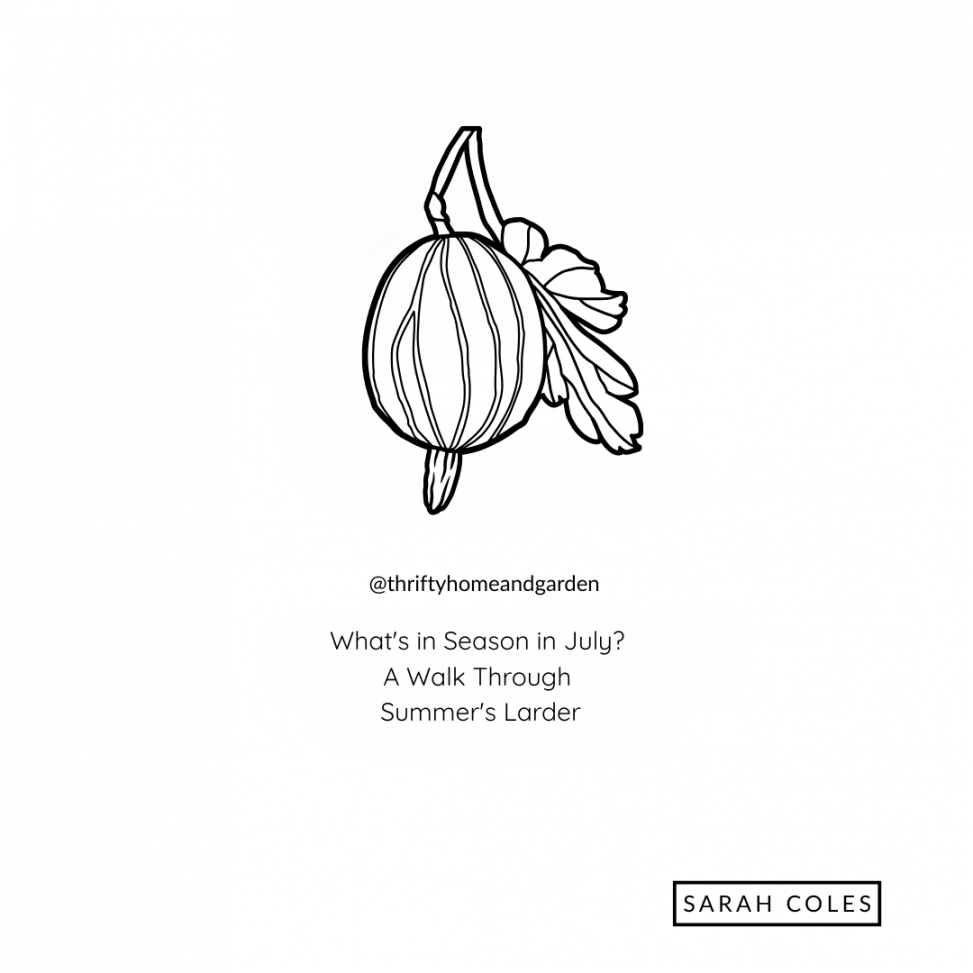
Gooseberries once enjoyed celebrity status in cottage gardens. Entire village competitions were held to grow the largest fruit, with local pride resting on remarkably oversized berries. Their sharpness may surprise modern tastes, but gently simmer them with a little elderflower cordial and they become wonderfully fragrant. Served beneath a buttery crumble topping or alongside homemade custard, they deserve far more attention than they receive.
The vegetable garden tells its own story.
Broad beans stand proudly in neat rows, heavy pods gently swaying in the breeze. Few vegetables can claim such an ancient history. Archaeologists have uncovered broad beans in Bronze Age settlements, making them one of the oldest cultivated crops still enjoyed today.
Freshly picked, they are wonderfully sweet. A few minutes in boiling water, finished with melted butter, chopped parsley, lemon zest and crumbled feta, is often all they need. Rich in protein, iron, folate and fibre, they remind us that healthy food need never be complicated.
Then come the courgettes.
Every gardener laughs at the same joke because every gardener eventually experiences it.
One week there are none.
The next, there are enough to feed the entire neighbourhood.
Originally developed in Italy during the nineteenth century, courgettes have become one of summer’s most generous crops. Grated into fritters with herbs and Parmesan, roasted beside peppers and onions, or stirred gently into pasta, they seem happy in almost every recipe imaginable.
Tomatoes, however, may be July’s greatest luxury.
There is simply no comparison between one picked warm from the vine and one that has travelled for days before reaching the kitchen. Slice a sun-ripened tomato onto a plate, add fresh basil, a drizzle of good olive oil and a pinch of sea salt, and you’ve created one of summer’s finest meals. Tomatoes are rich in lycopene, a powerful antioxidant that becomes even more available when gently cooked.
Nearby, French beans are beginning to climb with enthusiasm, while beetroot quietly swells beneath the soil, storing its remarkable crimson pigments. These vibrant roots have travelled from Roman gardens into modern kitchens, bringing with them valuable folate, potassium and naturally occurring nitrates that help support healthy circulation.
Lift a few, roast until tender, then pair with peppery rocket, creamy goat’s cheese and toasted walnuts. It is a combination that feels every bit as colourful as July itself.
Perhaps nowhere is the season better celebrated than beneath the soil.
Freshly lifted new potatoes arrive with skins so delicate they scarcely need peeling. They carry a sweetness that disappears within weeks of harvest and remind us why eating seasonally matters. Boiled gently before being tossed with butter, parsley and chives, they ask for nothing more.
Above them, cherry trees offer one final treat.
Their season is wonderfully brief, which somehow makes every handful feel precious. Long associated with celebration and abundance, cherries are now known to contain natural compounds linked with reducing inflammation and promoting restful sleep. Nature, as it so often does, quietly provides exactly what we need.
And threaded through it all are the herbs.
Basil beside the tomatoes. Mint with strawberries. Chives over new potatoes. Parsley stirred through broad beans. They are often the finishing touch that transforms a meal from ordinary to memorable, filling both the garden and the kitchen with unmistakable scents of summer.
Perhaps that is the greatest joy of July.
It reminds us that good food is never only about nourishment. It is about seasons, memories, anticipation and sharing. It is about eating strawberries still warm from the afternoon sun, picking herbs moments before supper and discovering that the simplest meals are often the most satisfying.
The garden teaches us patience throughout the year.
July is when it says thank you.
So wander through your local market, visit a pick-your-own farm, harvest from the allotment or simply gather a few handfuls from your own garden. Fill your kitchen with colour while you can, because before long the first hints of autumn will quietly appear.
For now, though, summer is at its most generous.
And every basket tells the story.
A Simple July Supper
Celebrate the very best of July with this easy seasonal salad that captures the flavours of midsummer.
Warm New Potato, Broad Bean & Tomato Salad
Ingredients
- 500g new potatoes
- 200g broad beans (double podded if large)
- 250g ripe tomatoes, chopped
- Handful of fresh basil leaves
- Handful of chopped parsley
- 2 tbsp extra virgin olive oil
- 1 tbsp lemon juice
- Sea salt and freshly ground black pepper
- Optional: crumbled feta or soft goat’s cheese
Method
- Boil the new potatoes until just tender, then halve while still warm.
- Cook the broad beans for 3–4 minutes, drain and remove the outer skins if they are large.
- Combine the potatoes, broad beans and tomatoes in a serving bowl.
- Whisk together the olive oil, lemon juice, salt and pepper before pouring over the vegetables.
- Scatter with basil and parsley, adding feta or goat’s cheese if using.
Serve warm with crusty bread for a simple summer lunch or alongside grilled fish or chicken.
Further Reading: What to Forage in July, The July Garden: Living in the Height of Summer, Foraging Elderberries, July Foraging: A Guide to Summer’s Natural Harvest, The Art of Foraging: Discovering Nature’s Larder, Discover Nature’s Bounty Foraging for Food and Fun
Daily Inspiration: Instagram, Pinterest, Threads, Twitter, TikTok, BlueSky