There is something rather generous about September.
Summer has not quite packed its bags. Tomatoes are still warm from the greenhouse, runner beans continue to appear almost as quickly as they can be picked, and the last raspberries hide beneath their leaves. Yet autumn has begun to make itself known. Apples are dropping into orchard grass, damsons darken on the branch and the first cool evenings make a bowl of soup seem appealing once more.
It is this meeting of two seasons that makes September one of the richest months in the British food calendar. The National Trust describes it as probably the most abundant month for British-grown produce, when summer crops remain productive just as autumn’s harvest begins.
And beyond the garden gate, September has its own harvest from the sea. Choosing seafood needs a little more care than simply following a seasonal calendar, however: where something was caught or farmed, and how, can be just as important as the month in which we eat it. The Marine Conservation Society’s Good Fish Guide is useful for checking individual choices.
So, take a basket into the garden, wander through the greengrocer’s door or see what has arrived at the fishmonger’s. September has plenty to offer.
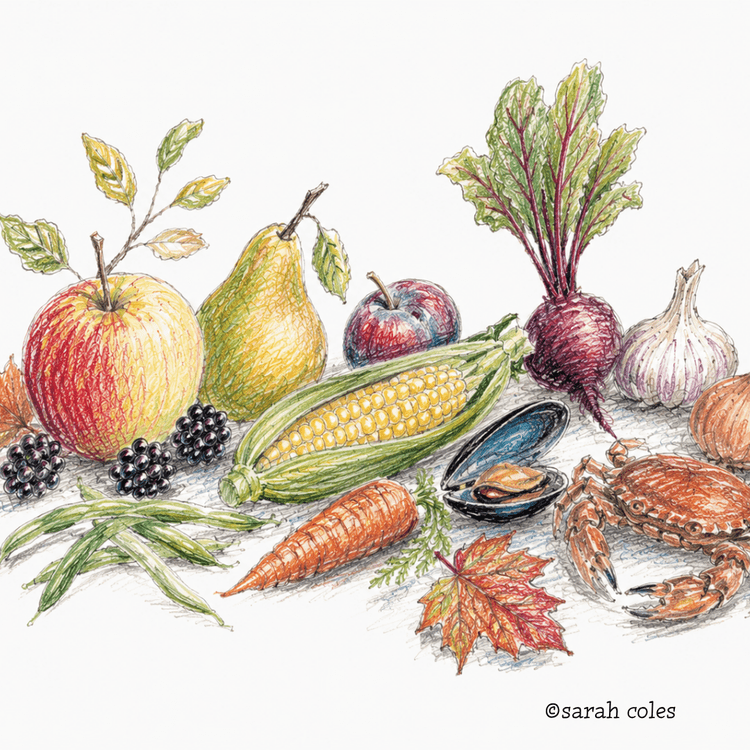
From the orchard and hedgerow
Apples
Few foods announce the arrival of autumn quite like the apple. September is when apple picking begins in earnest, although the exact moment varies enormously between varieties. Britain’s relationship with the fruit stretches back centuries; today apples are grown for eating, cooking and cider making.
Apples provide fibre, particularly when eaten with their skin, as well as vitamin C and naturally occurring plant compounds. Their great virtue in the kitchen is their versatility. A sharp cooking apple can disappear beneath a blanket of crumble, while sweeter eating varieties are excellent sliced into porridge, salads or a cheese sandwich.
Try: bake quartered apples with blackberries, a little cinnamon and a spoonful of honey, then serve warm with yoghurt or custard.
Pears
Pears can be deceptive. Unlike many fruits, some varieties are best picked while still firm and allowed to finish ripening indoors. September is the beginning of the main harvest, bringing fruit with a delicate sweetness and, when perfectly ripe, almost buttery flesh.
They are a useful source of fibre and provide vitamin C and potassium, alongside a high water content.
Try: poach pears gently in apple juice with cinnamon and a strip of lemon peel. Or keep things savoury and pair thin slices with blue cheese, walnuts and peppery leaves.
Blackberries
A September walk along a country lane can easily turn into an impromptu harvesting expedition. Blackberries are among the month’s great wild treats, appearing in hedgerows alongside other late-summer fruits.
Their deep purple colour comes from anthocyanins, plant pigments with antioxidant properties. Blackberries also supply fibre, vitamin C and vitamin K.
There is, of course, blackberry and apple crumble – and there is nothing wrong with returning to a classic. But the berries are equally good stirred through yoghurt, simmered into compote or added to a sauce for roast meat.
Try: cook blackberries briefly with chopped apple until just softened, spoon over porridge and scatter with toasted oats.
Plums and damsons
By September, plums are giving way to some of their later relations, including the small, dark and wonderfully tart damson. The damson’s sharp flavour makes it particularly suited to cooking and preserving.
Both provide fibre, potassium and vitamin C, while their coloured skins contain a range of plant compounds.
Damsons can be rather uncompromising eaten straight from the tree, but add a little sugar and heat and they become something quite different.
Try: roast halved plums with honey and thyme, or turn damsons into jam, chutney or a richly coloured compote for breakfast.
Autumn raspberries
The strawberry may belong to June, but raspberries are not finished yet. Autumn-fruiting varieties continue cropping during September, producing jewel-like berries as the days begin to shorten.
Raspberries are high in fibre for their size and provide vitamin C and manganese.
Try: crush a handful very lightly and fold through thick yoghurt with toasted hazelnuts. They also freeze remarkably well, so an abundant crop need not be eaten all at once.
Figs
Where they grow successfully, figs are one of September’s quieter luxuries. A properly ripe fig should feel soft without being mushy, with flesh that is fragrant, honeyed and filled with tiny seeds. The National Trust includes figs among the fruits and vegetables to harvest or buy in September.
They provide fibre, potassium and small amounts of several minerals.
Try: halve figs, add a little goat’s cheese, thyme and black pepper, then bake until just soft. A drizzle of honey at the table is all they need.
From the kitchen garden
If the orchard hints at autumn, the vegetable patch still has one foot firmly in summer. Courgettes, beans, tomatoes and cucumbers continue cropping while carrots, beetroot, potatoes and brassicas begin to pull the menu towards more substantial dishes.
Tomatoes
September tomatoes can be among the best of the year. After weeks of summer warmth, British-grown fruit can be intensely flavoured and wonderfully fragrant.
Tomatoes are a source of vitamin C, potassium and folate. They also contain lycopene, the red plant pigment whose availability to the body increases when tomatoes are cooked.
Try: slow-roast halved tomatoes with garlic and thyme until their edges begin to caramelise. Spoon them onto toast, stir through pasta or blitz into soup.
Sweetcorn
Few vegetables deteriorate quite so noticeably after picking as sweetcorn, because its sugars gradually turn to starch. This makes locally grown September cobs particularly worth seeking out. Sweetcorn is harvested young, before its kernels become the starchier maize used for flour and other products.
It provides fibre, carbohydrate, folate and several B vitamins.
Try: char a cob in a hot pan, slice away the kernels and toss them with tomatoes, spring onions, chilli, lime and coriander.
Runner and French beans
If you’ve ever grown runner beans, September can feel less like harvesting and more like trying to keep up with them.
Both runner and French beans remain productive at this time of year. They provide fibre, folate, vitamin C and vitamin K, with a little plant protein too.
Young beans need very little interference.
Try: steam until just tender, then toss with butter, lemon zest and toasted hazelnuts. Larger runner beans are excellent sliced finely and folded into a tomato-rich stew.
Courgettes and summer squash
By September, anyone with a productive courgette plant may be running short of ideas. Fortunately, the vegetable is much more versatile than its mild flavour suggests.
Courgettes contain vitamin C and potassium and, because of their high water content, are naturally light. Larger specimens become more watery and develop tougher skins, so smaller courgettes are generally preferable for quick cooking.
Try: roast thick slices until golden, then dress with lemon, chilli and mint. The combination of soft courgette, chilli and fresh mint also makes an excellent late-summer salad.
Beetroot
Pull a beetroot from the ground and there is something wonderfully earthy about it even before it reaches the plate.
The roots provide folate, fibre, potassium and naturally occurring nitrates. And don’t discard fresh beetroot leaves: young ones can be treated rather like chard.
Try: roast whole beetroot in its skin, peel once cool enough to handle, then serve in wedges with goat’s cheese, walnuts and an apple-cider dressing.
Carrots
Carrots are so familiar that it is easy to overlook how good a freshly harvested one can be. Their characteristic orange colour comes largely from beta-carotene, which the body can convert into vitamin A. They also provide fibre and potassium.
Try: roast carrots with cumin seeds until their edges darken, then serve with yoghurt, parsley and lemon. Save clean carrot tops for pesto rather than automatically consigning them to the compost heap.
Fennel
With its crisp white bulb and gentle aniseed fragrance, fennel provides a refreshing bridge between summer salads and autumn cooking.
It supplies fibre, vitamin C and potassium. Raw, it is crisp and aromatic; cooked slowly, its assertive liquorice note softens considerably.
Try: shave the bulb very finely and combine with apple, lemon and walnuts. Alternatively, cut it into wedges and roast beside fish.
Peppers and chillies
After a warm summer, British greenhouses and sheltered gardens can still be producing peppers and chillies well into September.
Sweet peppers are particularly rich in vitamin C, while red varieties also contain carotenoids. Chillies contain capsaicin, responsible for their familiar heat.
Try: roast peppers until their skins blister, peel them and dress with olive oil, garlic and parsley. Keep the juices – they are full of flavour.
Chard and spinach
September still offers plenty of leafy greens before winter’s hardier brassicas take centre stage. Chard and spinach both feature among the month’s harvest.
They provide folate, vitamin K and carotenoids, along with minerals including magnesium and iron. The iron in plants is non-haem iron; serving greens with something rich in vitamin C can help the body absorb it.
Try: wilt chard or spinach with garlic and finish with lemon juice. Chard stalks take longer to cook than the leaves, so chop and cook them first rather than throwing them away.
Broccoli, cabbage and cauliflower
September is generous with brassicas too. Broccoli, cabbage and cauliflower are all being harvested, bringing more robust flavours back to the kitchen.
These vegetables provide fibre, vitamin C, folate and vitamin K, as well as glucosinolates – naturally occurring compounds characteristic of the brassica family.
Try: roast cauliflower at a high heat with cumin and coriander until browned around the edges, then serve with yoghurt and herbs. Finely shredded cabbage, meanwhile, makes a crisp slaw with apple and mustard dressing.
Potatoes
September sees the potato patch shifting towards the maincrop harvest. Potatoes have been grown in Britain since their introduction to Europe in the late 16th century, having originated in South America.
They provide carbohydrate, potassium and vitamin C, particularly when freshly harvested, as well as fibre when the skin is eaten.
Try: crush boiled potatoes lightly, drizzle with rapeseed oil and roast until crisp. Add rosemary and a few unpeeled garlic cloves for the final half-hour.
Onions, shallots and garlic
These are not always the stars of the harvest basket, but few ingredients work harder in the kitchen. September brings onions, shallots and garlic ready for harvesting and storing.
All belong to the allium family and contain various sulphur-containing plant compounds. They also provide small amounts of vitamin C, vitamin B6 and other micronutrients.
Try: slowly cook sliced onions until deeply golden and sweet, then pile onto toast with mature Cheddar. Roast whole garlic bulbs alongside vegetables and squeeze the softened cloves into dressings and soups.
From the sea
Seasonality at sea is more complicated than it is in the vegetable garden. A fish may traditionally be associated with a particular month but still be a poor environmental choice because of the condition of the stock or the way it has been caught.
That makes provenance worth asking about. The Marine Conservation Society advises checking the species, catch area and fishing or farming method rather than assuming that ‘British’ automatically means sustainable.
Brown crab
September sits comfortably within the main UK brown-crab fishing season, which generally runs from May to December. Pot-caught crab can have relatively low seabed impact, although sustainability ratings vary according to location.
Crab meat is rich in protein and supplies vitamin B12, selenium, iodine and zinc. Brown meat has a stronger, richer flavour; white meat from the claws is sweeter and more delicate.
Try: keep good crab simple. Fold white crab meat through linguine with lemon, parsley, garlic and a touch of chilli, or pile it onto brown toast with lemon and black pepper.
Mussels
There is an old tradition of associating mussels with months containing the letter ‘r’, and September duly opens the door. Modern harvesting and farming mean the reality is rather less rigid, but cooler months remain a natural time to put them back on the menu.
Mussels are nutritional heavyweights: they provide protein, vitamin B12, iron, selenium and iodine, as well as omega-3 fatty acids.
Sustainability matters here too. UK farmed mussels are currently rated a Best Choice by the Marine Conservation Society; they require no additional feed because they filter nutrients from the surrounding water.
Try: steam mussels with cider, leeks and parsley, then serve with good bread for soaking up the broth.
Haddock
Haddock makes a useful alternative to some of Britain’s more pressured fish stocks, but provenance remains important. The Marine Conservation Society currently identifies some North Sea and West of Scotland haddock as good choices depending on how and where it has been caught.
It is a lean source of protein and provides vitamin B12, selenium and iodine.
Try: gently bake haddock with leeks, parsley and a spoonful of crème fraîche, or use smoked haddock with September potatoes and sweetcorn in a warming chowder.
Plaice
Delicate and mild, plaice is a flatfish that needs comparatively little cooking. North Sea plaice is among the UK seafood options currently recommended by the Marine Conservation Society, although it is still sensible to check the catch information when buying.
Plaice provides lean protein, selenium and vitamin B12.
Try: pan-fry fillets in a little butter and serve with crushed potatoes, wilted spinach and lemon.
A note about mackerel
Mackerel would once have been an obvious inclusion in a September seasonal guide. It is an oily fish rich in protein, vitamin B12, selenium, vitamin D and omega-3 fatty acids, and late-summer mackerel has traditionally been prized around Britain’s coasts.
But seasonality cannot tell the whole story.
The Marine Conservation Society currently rates Northeast Atlantic mackerel sold in the UK as a Fish to Avoid, following concerns over declining stocks and fishing pressure. Its latest assessment says the stock is below safe biological levels.
It is a useful reminder that eating with the seasons must sometimes mean choosing not to eat something traditionally associated with them.
A September table
Perhaps the best thing about September food is that it doesn’t quite know which season it belongs to.
Lunch can still be tomatoes, cucumber and crisp beans eaten with the back door open to the garden. By evening, there might be roasted beetroot, potatoes and an apple pudding in the oven. A bowl on the kitchen table gradually fills with windfall fruit; jars appear in cupboards; the freezer begins its slow transformation from a place for ice cubes into somewhere to store berries, beans and sauces for darker days.
This is harvest time in its broadest sense: not simply an abundance of food, but a brief opportunity to enjoy ingredients when they naturally taste at their best.
There is an environmental argument for it too. Eating produce in season can help reduce the need for long-distance transport, heated growing and unnecessary packaging, particularly when we choose food grown close to home. But there is a simpler pleasure at work as well.
September apples taste of September. A blackberry gathered on a walk is quite different from one bought in the depths of winter. And a tomato eaten now, while British plants are still heavy with fruit, asks for almost nothing more than a little salt.
The season will turn soon enough. For the moment, the garden, orchard, hedgerow and coast have plenty to put on the table.
Further Reading: Autumn Foraging: Nature’s Harvest, The Art of Foraging: Discovering Nature’s Larder
Daily Inspiration: Instagram, Pinterest, Threads, Twitter, TikTok, BlueSky