There is a particular sort of beauty to the countryside in November. It is quieter than the exuberance of October, less certain of its colours and rather more inclined to arrive wearing a cloak of mist.
The trees, which only a few weeks ago were showing off in shades of gold, copper and crimson, are gradually surrendering their leaves. The hedgerows have become tangled silhouettes against pale skies, the fields are settling into winter, and the sun appears to have decided that a shorter working day is entirely reasonable.
Yet November is far from a month to be spent entirely indoors.
In fact, some of the most memorable moments of autumn are waiting to be discovered just as the season begins to slip away.
There are winter visitors arriving, fungi flourishing amongst the fallen leaves, the last colours lingering in unexpected corners and landscapes revealing details that summer kept hidden.
All we need is a coat, a little curiosity and, given the British weather, a sensible pair of boots.
A Landscape Revealed
As the leaves fall, the countryside begins to show its bones.
The great spreading branches of an oak become visible against the sky. Beech trees reveal their smooth grey trunks and elegant silhouettes, while the pale bark of silver birches catches what little sunlight filters through the clouds.
Views that were hidden beneath the summer canopy suddenly open up. A distant church tower appears beyond the woodland. The curve of a river becomes visible through bare branches. Familiar footpaths take on an entirely different character.
There is something rather lovely about this gradual unveiling.
We often think of autumn as a season defined by colour, but its final weeks offer something equally rewarding: shape, texture and space.
Look closely at a bare tree and you begin to appreciate its architecture. Every branch tells the story of years spent reaching towards the light, responding to wind, weather and the space available to grow.
The countryside may appear to be winding down, but it is also revealing things we rarely notice when everything is in full leaf.
And there is a quiet pleasure in rediscovering a familiar place as though seeing it for the first time.
The Last Leaves of Autumn
Although November is associated with bare branches and fallen leaves, autumn’s colour does not disappear all at once.
In a mild year, beech, oak and hornbeam may retain their foliage well into the month, while some ornamental trees and shrubs continue to provide brilliant displays.
Japanese maples can hold on to rich reds and oranges, liquidambars may offer extraordinary combinations of purple, scarlet and gold, and the leaves of some ornamental cherries turn warm shades before finally falling.
The precise timing varies with the species, the weather and where in Britain you happen to be.
A sharp frost or a spell of strong wind can bring an abrupt end to the display. A sheltered garden may keep its colour long after an exposed woodland has become almost entirely bare.
But perhaps that is part of the pleasure.
November’s colours are fleeting. They ask us to notice them while they are there.
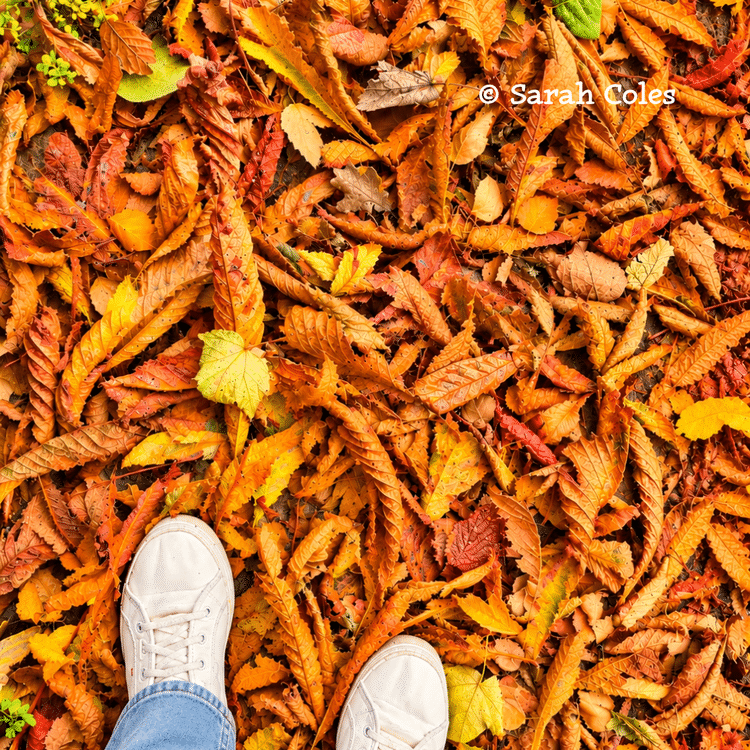
A single golden leaf caught in a hedge can seem almost luminous against the darker landscape. A patch of copper beech leaves beneath a tree becomes a small celebration of colour on an otherwise grey afternoon.
There is no need for a spectacular woodland panorama.
Sometimes autumn’s final flourish is found in the smallest details.
A Wonderful Time for Watching Wildlife
It is tempting to imagine that the countryside becomes quieter because wildlife has begun to disappear.
In reality, November is a time of considerable activity.
Many resident birds remain busy feeding and establishing territories, while others arrive in Britain to spend the winter.
Fieldfares and redwings, members of the thrush family, arrive in substantial numbers from northern Europe and Iceland. They can often be seen feeding on berries in hedgerows or searching fields and grassland for invertebrates.
Fieldfares are particularly striking birds, with their grey heads, chestnut backs and spotted breasts. Redwings are smaller, with a distinctive pale stripe above the eye and reddish colouring beneath the wings.
Both are worth looking out for on a November walk.
Along the coast and around estuaries, the season brings another spectacle.
Large numbers of ducks, geese and wading birds gather on wetlands, mudflats and saltmarshes. Here in Norfolk, places such as the north Norfolk coast and the Broads provide important winter habitats for many species.
The sound of pink-footed geese passing overhead is one of the great seasonal experiences of eastern England. Arriving from breeding grounds in Iceland and Greenland, these birds spend the colder months feeding on farmland and gathering at traditional roosting sites.
There is something deeply stirring about hearing their calls carried across a cold November sky.
It is a reminder that while one part of the natural world is settling down, another is arriving.
And the countryside remains very much alive.
The Fascinating World Beneath Our Feet
November is also a wonderful month for discovering fungi.
After periods of autumn rain, woodland floors, grassland and decaying timber can become home to an extraordinary variety of mushrooms and toadstools.
Some are easily overlooked, appearing as small brown caps amongst fallen leaves. Others are rather more theatrical.
The fly agaric (Amanita muscaria), with its familiar red cap and white spots, looks as though it belongs in the illustrations of a fairy tale. Shaggy inkcaps (Coprinopsis comatus) may appear in grassy places, while various bracket fungi grow on living or dead wood.
Not all fungi produce visible fruiting bodies in autumn, and many species can appear at other times of year, but the damp conditions of October and November are particularly favourable for numerous woodland fungi.
What we see above ground is often only a small part of the organism.
Much of a fungus exists as a network of fine threads called hyphae, which collectively form a mycelium. These networks grow through soil, wood and other materials, playing important roles in decomposition and, for some species, forming mutually beneficial relationships with plants.
Fungi help recycle nutrients and support the functioning of woodland ecosystems.
Without them, the countryside would be a very different place.
They are fascinating to photograph and observe, although identification can be difficult. Some poisonous species closely resemble edible ones, so never eat wild fungi unless their identity has been established with certainty by someone suitably experienced.
For most of us, simply admiring them is reward enough.
And, unlike certain other autumn treasures, they do not require us to carry home pockets full of damp leaves that will inevitably be forgotten in a coat.
The Pleasure of a Misty Morning
Few things transform a familiar landscape quite like November mist.
It gathers in low fields, settles above rivers and drifts between the trees, softening the edges of everything it touches.
A familiar footpath becomes mysterious. A lone oak emerges from the whiteness. The distant countryside disappears, leaving only the nearest hedgerow and the sound of birds somewhere beyond it.
Mist forms when tiny water droplets remain suspended in the air, often as moist air cools towards its dew point. Clear, calm nights can be particularly favourable for the formation of radiation fog, especially in low-lying places.
Across the Norfolk countryside, with its river valleys, marshes and open fields, these conditions can create wonderfully atmospheric mornings.
There is a special pleasure in walking through a landscape that seems to be gradually revealing itself.
The air feels still, sounds carry differently, and the familiar world takes on an almost dreamlike quality.
Of course, mist is rather more romantic when viewed from a footpath than when it appears just as you need to drive somewhere.
But when there is no particular hurry, it can turn an ordinary morning into something memorable.
Why November Walks Are Good for Us
There is something about being outdoors in the colder months that can leave us feeling particularly refreshed.
Perhaps it is the contrast between a warm home and the cool air outside. Perhaps it is the change of scenery, the movement or simply the pleasure of escaping the demands of everyday life for a little while.
Walking provides gentle physical activity, and spending time in natural surroundings can support mental wellbeing.
Research has associated access to green spaces and time spent in nature with benefits including improved mood and reduced stress, although individual experiences vary and the effects depend on many factors.
Natural daylight also plays an important role in regulating our sleep-wake cycle, making time outdoors during the shorter days especially worthwhile.
None of this means we need to embark on an ambitious hike every time we leave the house.
A gentle walk through a local park, a stroll along a country lane or half an hour in the garden can all provide opportunities to enjoy the outdoors.
And there is no requirement to return looking as though you have completed a particularly demanding expedition.
The best walk is often the one you actually enjoy.
The Beauty of the November Coast
While woodland and countryside walks have their own appeal, November can be a magnificent month beside the sea.
The beaches are quieter, the light is softer and the coastline takes on a different character from its summer self.
Along the Norfolk coast, wide stretches of sand, saltmarsh and shingle provide space to walk, watch wildlife and enjoy the changing weather.
On a calm day, the sea may appear almost silver beneath a pale sky. At other times, strong winds drive waves towards the shore, sending spray into the air and reminding us that the North Sea has little interest in providing a gentle seaside experience.
Both have their attractions, provided we admire the rougher weather from a safe distance.
The coastal landscape is also an important winter refuge for wildlife.
Waders feed across exposed mudflats, ducks gather in sheltered waters and geese move between feeding grounds and roosting sites.
At places such as Cley Marshes, Holkham and Titchwell, November can be a rewarding time for birdwatching.
There is something wonderfully restorative about standing beside the sea, listening to the waves and watching the movement of birds across an open sky.
Just remember that coastal weather can change quickly, tides can cut off access and exposed shorelines require care, particularly during strong winds and rough seas.
A peaceful walk is considerably more enjoyable when it does not involve an unexpected encounter with an incoming tide.
Little Things Worth Looking For
One of the loveliest ways to enjoy November outdoors is to stop looking for grand spectacles and begin noticing smaller things.
A spider’s web decorated with dew.
The delicate veins of a fallen leaf.
A cluster of rosehips glowing red against a bare hedgerow.
A robin singing from a fence post.
The patterns made by raindrops on a woodland pool.
The first frost outlining blades of grass.
These details are easily missed when we are walking quickly or thinking about everything waiting for us at home.
But they are often the moments that stay with us.
There is no need to identify every plant or bird, although learning a little about the natural world can make familiar places even more interesting.
Simply taking time to observe is enough.
You might even discover that a walk you have taken a hundred times still has something new to show you.
Letting the Countryside Keep Its Autumn Treasures
November often brings the temptation to tidy everything away.
Fallen leaves are gathered, seedheads removed and gardens prepared for the colder months.
Yet much of what looks untidy to us provides valuable habitat for wildlife.
Leaf litter shelters invertebrates and helps protect the soil. Hollow stems and standing vegetation can provide overwintering sites for insects, while seedheads offer food for some birds.
In woodland, fallen branches and decaying timber support fungi, beetles and many other organisms.
These materials are not simply waste waiting to be cleared.
They are part of the natural cycle that sustains the countryside.
There are, of course, places where clearing leaves is sensible, particularly from slippery paths, steps and drains. But in suitable garden areas, allowing some leaves and stems to remain can make a meaningful difference.
November is a lovely time to appreciate this quieter side of nature.
The things that appear to have finished their work for the year may still have important roles to play.
Making the Most of the Last Autumn Days
The final weeks of autumn do not ask for elaborate plans.
There is no need to travel across the country in search of the perfect view or wait for a rare spell of glorious weather.
The beauty of November is often close to home.
It might be found in a local woodland, a familiar stretch of coastline, a village footpath or the garden just beyond the back door.
Take a different route. Visit somewhere you usually associate with summer. Spend a little time watching the birds or looking at the shapes of trees now that their leaves have fallen.
And do not be discouraged by a grey sky.
Some of the most atmospheric November landscapes appear on days when the weather forecast offers very little encouragement.
A waterproof coat and sturdy boots can make all the difference.
So can the knowledge that there is something warm waiting when you return.
Before Autumn Says Goodbye
There is a quiet poignancy to the last days of autumn.
The season that began with harvest fields, ripening berries and the first golden leaves is gradually drawing to a close.
Soon the trees will stand bare, winter frosts will become more frequent and the countryside will settle into another chapter of the year.
But November is not simply the end of something.
It is a season of its own, filled with subtle changes, remarkable wildlife and unexpected beauty.
There is still colour to be found, still birdsong to be heard and still much to discover in the fields, woods and coastal landscapes around us.
Perhaps the greatest pleasure of November is that it encourages us to pay attention.
To look a little closer. To walk a little more slowly. To appreciate the countryside not only when it is at its most colourful, but also when its beauty is quieter and less obvious.
Autumn may be preparing to leave us, but it has not quite finished telling its story.
And it would be a shame to miss the final chapters simply because we were too busy waiting for winter.
Further Reading: What’s in Season in November? A Guide to Britain’s Late Harvest, What to Forage in November: The Last Gifts of the Hedgerows, Soup Season: Delicious Homemade Soups for Chilly Autumn Days
Daily Inspiration: Instagram, Pinterest, Threads, Twitter, TikTok, BlueSky